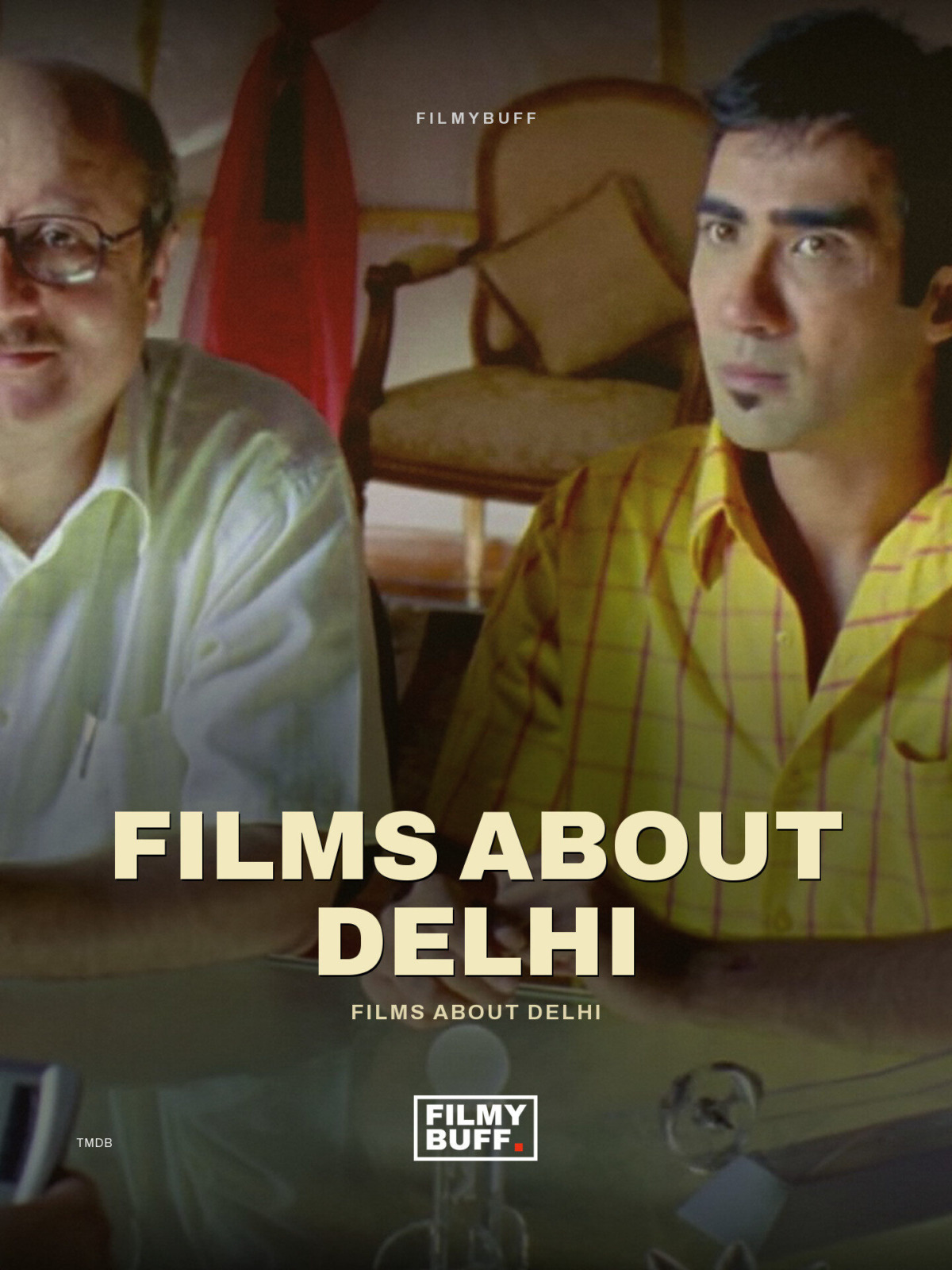
| # | Film | Language | Where to watch |
|---|---|---|---|
| 1 | Khosla Ka Ghosla (2006) | Hindi | — |
| 2 | Do Dooni Chaar (2010) | Hindi | — |
| 3 | Monsoon Wedding (2001) | Hindi, English | — |
| 4 | Soni (2018) | Hindi | Netflix |
| 5 | Vicky Donor (2012) | Hindi | — |
| 6 | Piku (2015) | Hindi | — |
| 7 | Aankhon Dekhi (2013) | Hindi | — |
Delhi on screen often arrives as a greatest-hits reel: India Gate at dawn, a car gliding past Rajpath, maybe a qawwali at Nizamuddin. I have nothing against that city, but it is not the one I feel in my chest. The Delhi I know is aunties arguing over parking, middle-class budgets stretched thin, old neighbourhoods changing faster than anyone admits, and a scrappy, negotiating kind of warmth.
That is the city this watchlist chases. These seven Hindi films, made between 2001 and 2018, treat Delhi as something more than a backdrop. They get the homes, the lanes, the class friction and the constant small bargaining right — no monuments montage in sight.
Khosla Ka Ghosla (2006)
Khosla Ka Ghosla is a comedy about a retired middle-class man whose plot of land is grabbed, and the unlikely team that plots to get it back. It belongs here because the plan is pure Delhi jugaad: a little bluff, a little improvisation, neighbours and relatives pulled in, and a very local understanding of how things actually work. Watching it feels like being let in on a family scheme that should not work but somehow does. It never turns the Khoslas into slick con artists, which is exactly why the film remains so believable.
Do Dooni Chaar (2010)
Do Dooni Chaar follows a schoolteacher, his wife and their two children as a simple desire for a scooter exposes the arithmetic of a middle-class DDA flat life. The film belongs on this list because its Delhi is made of instalments, tuition fees, a neighbour’s snide remark and the gap between wanting and affording. It finds comedy in everyday maths without making anyone a punchline. Watching it feels like sitting in that slightly-too-small drawing room where every rupee has to be explained.
Monsoon Wedding (2001)
Mira Nair’s Monsoon Wedding tracks a loud, extended Punjabi family coming together for an arranged marriage in Delhi. It belongs here because the city is present in its class seams: the wedding planners, the staff, the family secrets and the money worries all sit alongside the marigolds and the music. Nair shoots the celebration with real affection but does not turn Delhi into a postcard, and the film is better for it. Watching it feels like being a guest who notices both the joy and the cracks, and is still glad to be there.
Soni (2018)
Soni is a restrained, tense drama about two policewomen navigating their work and each other in Delhi. It belongs on this list because it gives us a street-level city most films reduce to a siren: night patrols, small police stations, crowded bylanes and the constant management of threat. The film is driven by silence and irritation more than action set pieces. Watching it feels like holding your breath in a city that rarely lets anyone fully relax.
Vicky Donor (2012)
Vicky Donor turns a ridiculous-sounding idea into a grounded Delhi comedy about a Lajpat Nagar boy, his family and an unusual business. The film belongs here because of its texture: the shop-lined streets, drawling relatives, big-hearted bickering and the way everyone has an opinion. It is broad in places but never floats away from a believable, lived-in city. Watching it feels like being dragged into a family gathering where you know you will laugh.
Piku (2015)
Piku is a father-daughter story set in Chittaranjan Park’s Bengali Delhi before a road trip to Kolkata. It belongs on this list because the neighbourhood is more than a name: the addas, the food, the particular intimacy and irritation of caring for an ageing parent all feel inseparable from the city. The road trip gives the film room to breathe, but Delhi is what gives the friction its home. Watching it feels like a long car ride with people you love who are also exhausting you.
Aankhon Dekhi (2013)
Aankhon Dekhi centres on Bauji, an older man from Old Delhi who decides to believe only what he sees with his own eyes. It belongs here because the crowded lanes and joint family are the exact hothouse his late-life experiment needs: everyone is in everyone else’s business, and his new rule disturbs the whole house. The film is philosophical without feeling academic. Watching it feels like standing in a doorway while a family argues its way toward something true.
Delhi on screen is at its best when it refuses to pose. These seven films are my favourites because they let the city be loud, warm, petty, generous and particular. If you have a Delhi film that feels like your Delhi — from any decade, language or platform — tell me. I am always looking for the next one that gets the city beyond the monuments right.
Film images from TMDB. This product uses the TMDB API but is not endorsed or certified by TMDB.