| # | Film | Language | Where to watch |
|---|---|---|---|
| 1 | Piku (2015) | Hindi | — |
| 2 | The Intern (2015) | English | — |
| 3 | Uyare (2019) | Malayalam | — |
| 4 | October (2018) | Hindi | — |
| 5 | Peranbu (2018) | Tamil | — |
| 6 | Amour (2012) | French | — |
| 7 | The Father (2020) | English | — |
Some love stories don’t ask who saves whom. They ask who stays, who remembers the small thing, who returns tomorrow even when nothing is fixed. That is the love I find hardest to look away from, because it looks less like cinema and more like life.
This watchlist is for anyone who has ever cared for a parent, a partner, a friend, or a stranger and found that the heroism was in the showing up. The seven films below don’t turn care into a soft-focus montage. They stay with the daily, often invisible work of being there—and they are better for it.
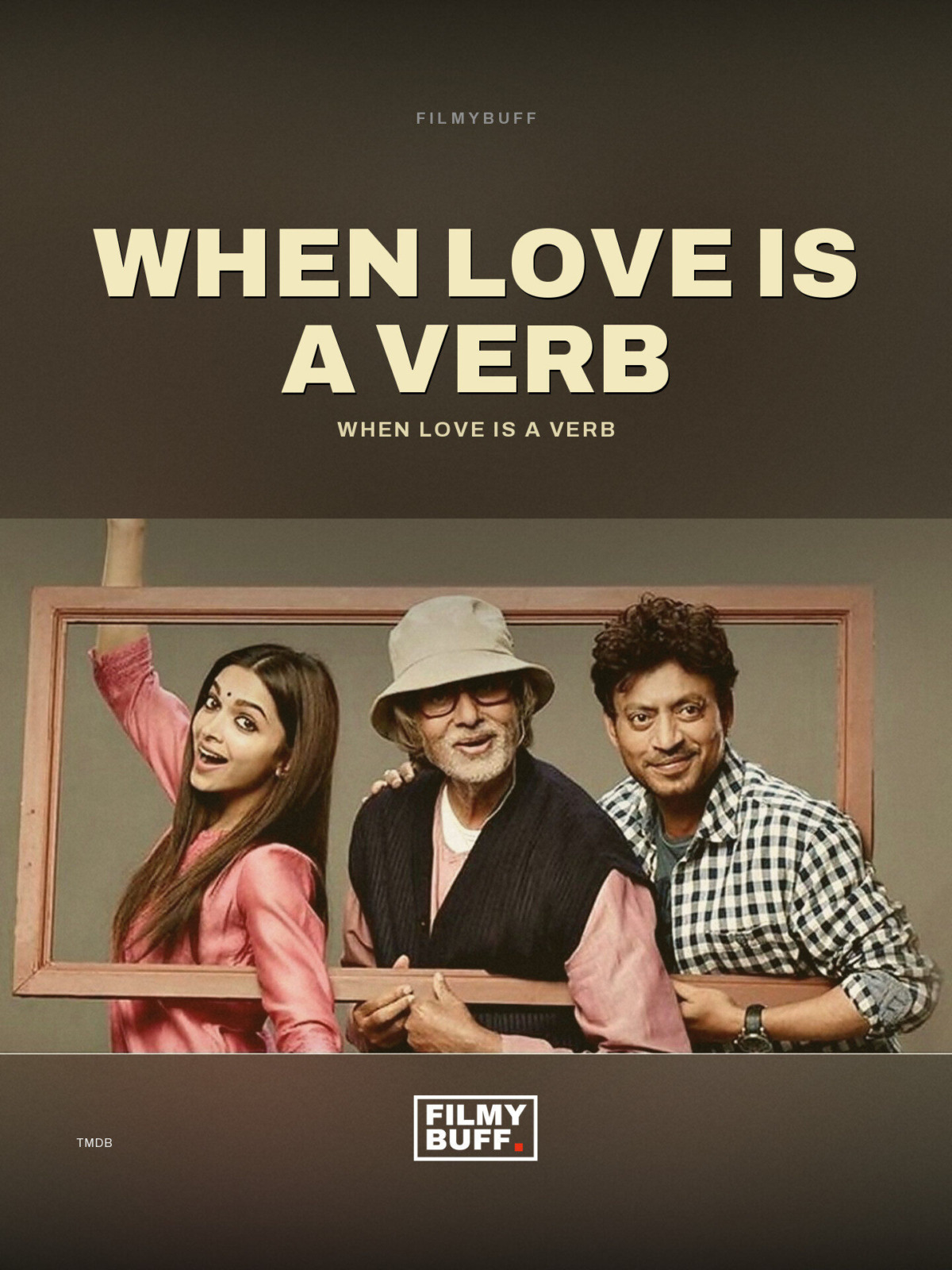
Piku (2015)
A Hindi comedy-drama about a daughter and her hypochondriac father on a road trip from Delhi to Kolkata, with a reluctant taxi-service owner caught between them. It belongs here because it never pretends that looking after a parent is easy; the irritation, exhaustion and tenderness sit together in the same cramped car. Watching it feels like being welcomed into a bickering family that somehow makes room for you. Deepika Padukone, Amitabh Bachchan and Irrfan Khan find a rhythm in the chaos that feels exactly like love.
The Intern (2015)
Robert De Niro plays a retired widower who joins an e-commerce start-up as a senior intern, while Anne Hathaway plays the founder trying to hold her company and life together. It belongs on this list because its care moves in both directions: he offers steadiness, she offers purpose, and neither becomes the other’s rescue. The film has a gentleness that never tips into a lecture. It feels like a warm cup of tea on a day when everything is running late.
Uyare (2019)
A Malayalam drama about Pallavi, a young woman whose dream of becoming a pilot is upended after an acid attack, and the people who stay close without trying to script her recovery. What makes it vital here is that Pallavi’s fight is not just about survival; it is about accepting care on her own terms, while refusing to turn the people who love her into saviours. It feels urgent and angry, then surprisingly tender. The camera never lets her become a case study.
October (2018)
Varun Dhawan plays Dan, an impulsive hotel-management trainee whose life changes after a friend he barely knew, Shiuli, suffers an accident. This is a Hindi film that trusts silence more than dialogue, and that restraint is why the care between Dan and Shiuli feels earned, not announced. Watching it is slow, wintry and almost meditation-like. It refuses to explain every gesture, and that is precisely why the gestures land.
Peranbu (2018)
Mammootty plays a single father who returns to his daughter, Paapa, who has cerebral palsy, and begins to know her not as a condition but as a person. It belongs here because it treats parenting as continuous learning: full of mistakes, embarrassment, tenderness and slow understanding. The film never makes his daughter a case study or the father a martyr. It feels unflinching, often uncomfortable, and ultimately deeply respectful of the work that care demands.
Amour (2012)
Michael Haneke’s French drama follows an elderly couple, Georges and Anne, after Anne’s health begins to fail, and the promise of a shared life is tested to its limits. It belongs on this list because it refuses to look away from how hard the last promise can be. That honesty is exactly why I have not stopped thinking about it. Watching it is devastating but never exploitative; it treats love as a daily act of courage more than a feeling.
The Father (2020)
Anthony Hopkins plays an ageing man living with dementia, and Olivia Colman plays his daughter, in a film that folds time and memory to put us inside his confusion. I close with this because it makes love both anchor and trigger: the daughter’s care is constant, but the condition distorts everything around it. It belongs on every list about showing up because it refuses easy comfort. More than any film I have seen, it reshapes how I hear the word care.
These seven are not the only films that understand love as a verb, of course. They are simply the ones I keep recommending when someone asks for stories that feel true. Tell me your own: which films made you feel the weight—and the grace—of simply showing up?
Film images from TMDB. This product uses the TMDB API but is not endorsed or certified by TMDB.