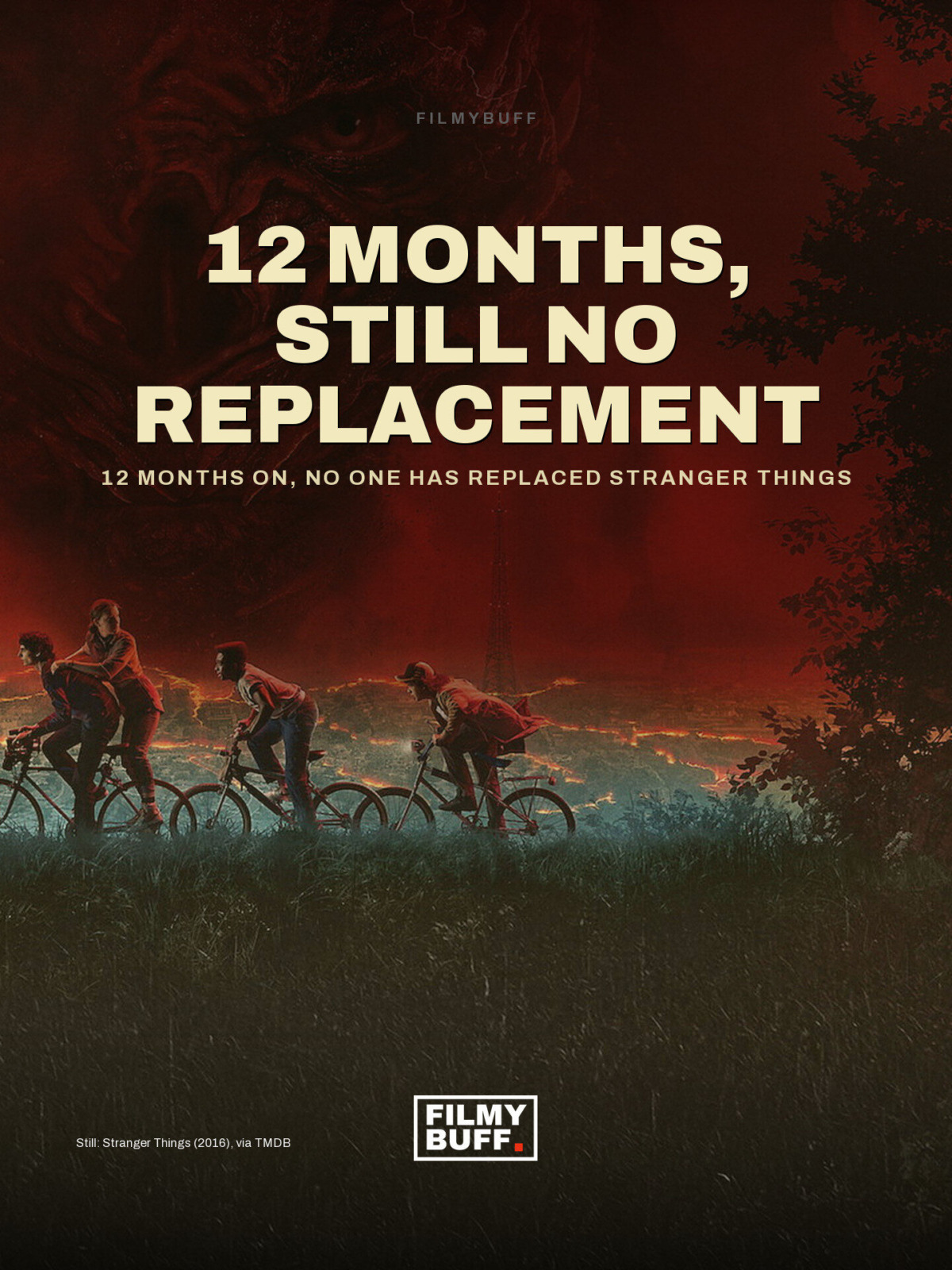
Twelve months after Stranger Things began its final season, the streaming world is still waiting for the show that takes its place. The series that helped turn Netflix into a global habit has no obvious successor, and the attempts to find one keep proving the same point: what made Hawkins work was not a formula.
Netflix already had acclaimed titles before 2016 — from House of Cards to Orange Is the New Black and BoJack Horseman. But Stranger Things turned ’80s nostalgia, small-town dread and coming-of-age yearning into a phenomenon that could not be ignored. A decade later, that original blend looks harder to repeat than ever.
The search for the “next Stranger Things”
After season 2 arrived in 2017 and season 3 leaned into a brighter, blockbuster tone in 2019, the industry began chasing the same lightning. The results show how slippery the target was.
- Wednesday was a hit, but its gothic boarding-school lane is its own thing.
- It: Welcome to Derry and The Institute capture the darkness, but feel too grim and gruesome.
- Goosebumps and the animated Stranger Things follow-up Tales from ’85 skew too family-friendly.
- Shelter stayed too grounded, while The Midnight Club, I’m Not Okay With This and Paper Girls were cancelled too soon.
- One Piece became one of Netflix’s biggest post-Stranger Things hits, but it is a completely different kind of show.
Each title grabbed one thread — the horror, the adventure, the teen angst — but none held the whole blend.
Stranger Things stopped being one show
Part of the reason is that Stranger Things itself kept changing. Season 1 was a moody small-town mystery where grief sat close to the surface. Season 3 turned sunny, silly and cartoonish, with a monster loose in a hospital. Season 4 swung back to gritty tragedy, and season 5 ended as an upbeat summer blockbuster where nearly everyone survived.
That tonal whiplash was so complete that a viral theory, dubbed ConformityGate, suggested the happy finale might be a false reality created by Vecna. The reaction pointed to the real issue: the ending felt disconnected from the show’s own history.
What a true original leaves behind
Look at earlier landmarks and the pattern is usually the opposite. Twin Peaks helped open the door for shows from The X-Files and Buffy the Vampire Slayer to Lost and Riverdale. Game of Thrones spawned a wave of fantasy epics, from The Witcher to The Rings of Power. Stranger Things has produced no comparable subgenre, even though its fifth season was the biggest TV season ever made.
The practical lesson for viewers is simple. If you want the grim season 1 Stranger Things, watch something like It: Welcome to Derry. If you want the knockabout season 3 energy, Goosebumps will scratch that itch. But stop waiting for one title to replace the original — the original couldn’t even decide what it was.
The bigger industry signal is also worth watching. As Prime Video’s Off Campus and Disney’s Percy Jackson & The Olympians move away from multi-year gaps between seasons, the mixed reception to the final season may be part of the reason. Some hits don’t create a formula; they just teach the market to move faster.