I have watched this scene more times than I can count, and it still makes me hold my breath. It is not loud, and that is exactly why it works.
1. The setup: where the scene sits in the film and what is at stake
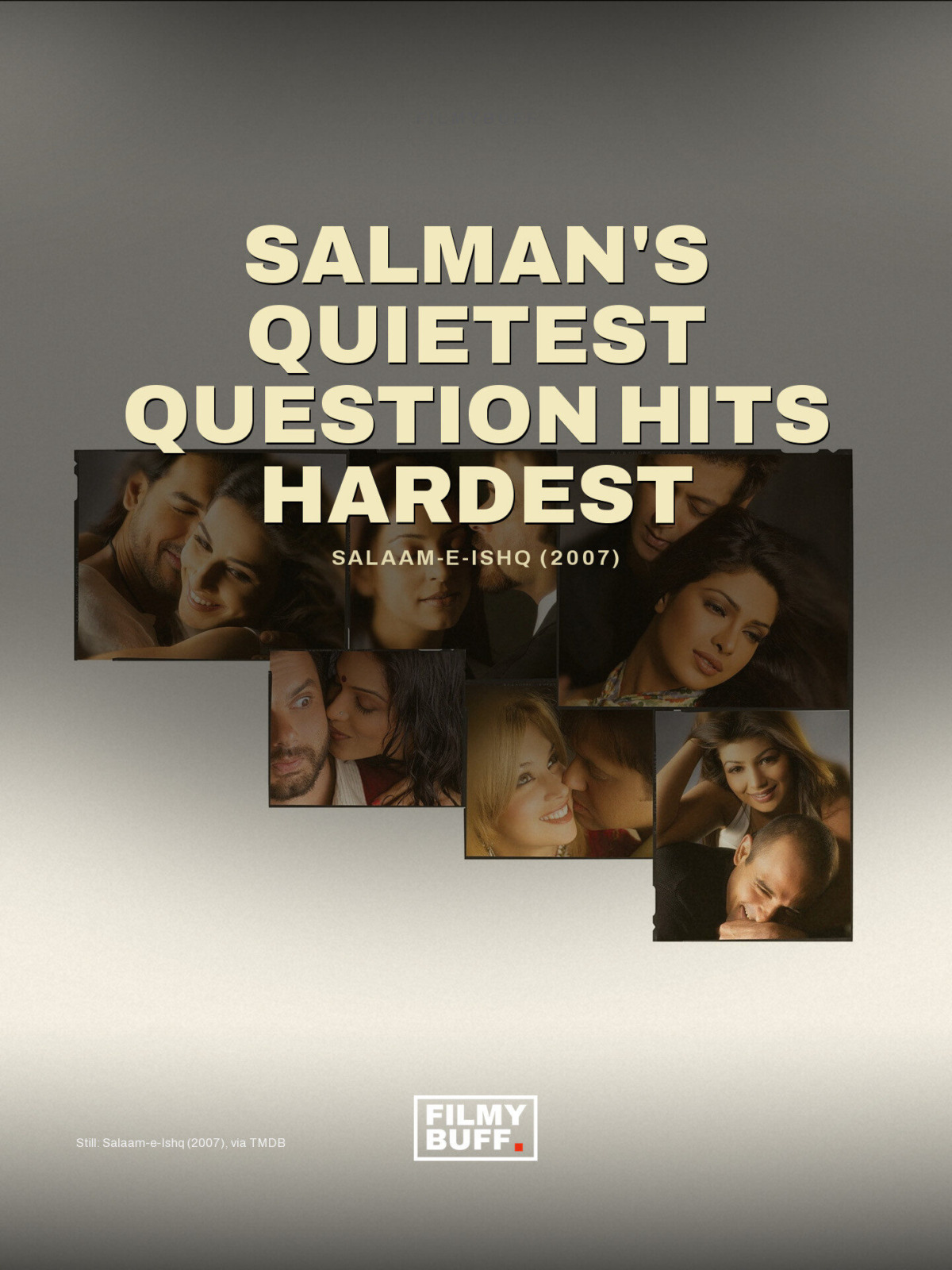
In an ensemble that keeps cutting between couples, the Rahul-Kamna thread is built on a simple, painful question: will she choose the life she can see or the man she loves? By this point, Kamna is on the edge of a decision that will change them both, and Rahul catches her before she crosses it. Nothing beyond this moment is spoiled here—just two people standing on opposite sides of a line.
2. The turn: the beat where the scene changes gear, and how the film gets there
The scene starts with Rahul already watching her, as if he has known the answer before he asks. The turn is not a shout; it is a drop. He lowers his voice, steps into her space, and the question stops being an accusation and becomes a mirror. Kamna is no longer being accused—she is being asked to see herself.
3. The line: the line or the moment people quote, and why it lands
“Tu jaanti hai na, tu kya karne ja rahi hai?” It is written like a plea dressed as a question. The little “na” does heavy lifting—it assumes she already knows, so there is nowhere to hide. Salman delivers it slowly, with no curl of anger, and that is why it lands: the line is not telling her something new, it is asking her to admit what she has been avoiding.
4. The performance: what the actor or actors do, precisely, that a lesser scene would not
Salman does the rarest thing here: he underplays. His hands stay still, his eyes stay on Kamna, and the only movement after the line is a small clench of his jaw. Priyanka answers with breath, not dialogue—she holds his gaze a beat too long, then lets her chin lift in that mix of guilt and defiance. A lesser scene would have her cry immediately or him grab her wrist; this one lets the silence carry the weight.
5. The craft: the staging, the cut, the music, the sound, the camera, whichever carries it
The staging keeps them close but not touching, so the gap between them works as hard as the words. The camera starts on the two of them and then pushes in on Kamna, leaving the background to fall away, which makes her the whole point of the question. On the cut, the editor holds the shot for a few extra seconds after he finishes speaking—it refuses to let her off the hook. The sound mix drops the ambient music to a near-hush, and what we hear is her breath and the quiet around it; the score only returns as a low hum after the silence has done its job.
6. Why it travels: why this scene is the one people share, decades or days later
Because it is the moment the whole film snaps into focus. In a movie this big, with so many stories running, one quiet question and two famous faces doing very little become the thing people quote. It travels as a Salman-Priyanka moment, but it lasts because almost everyone has watched someone they love walk toward a mistake and wished they could say exactly this.
Watch the original: Eros Universe Cineplex on YouTube. Shown for review and comment; the rights stay with the makers.