1. The setup: where the scene sits in the film and what is at stake
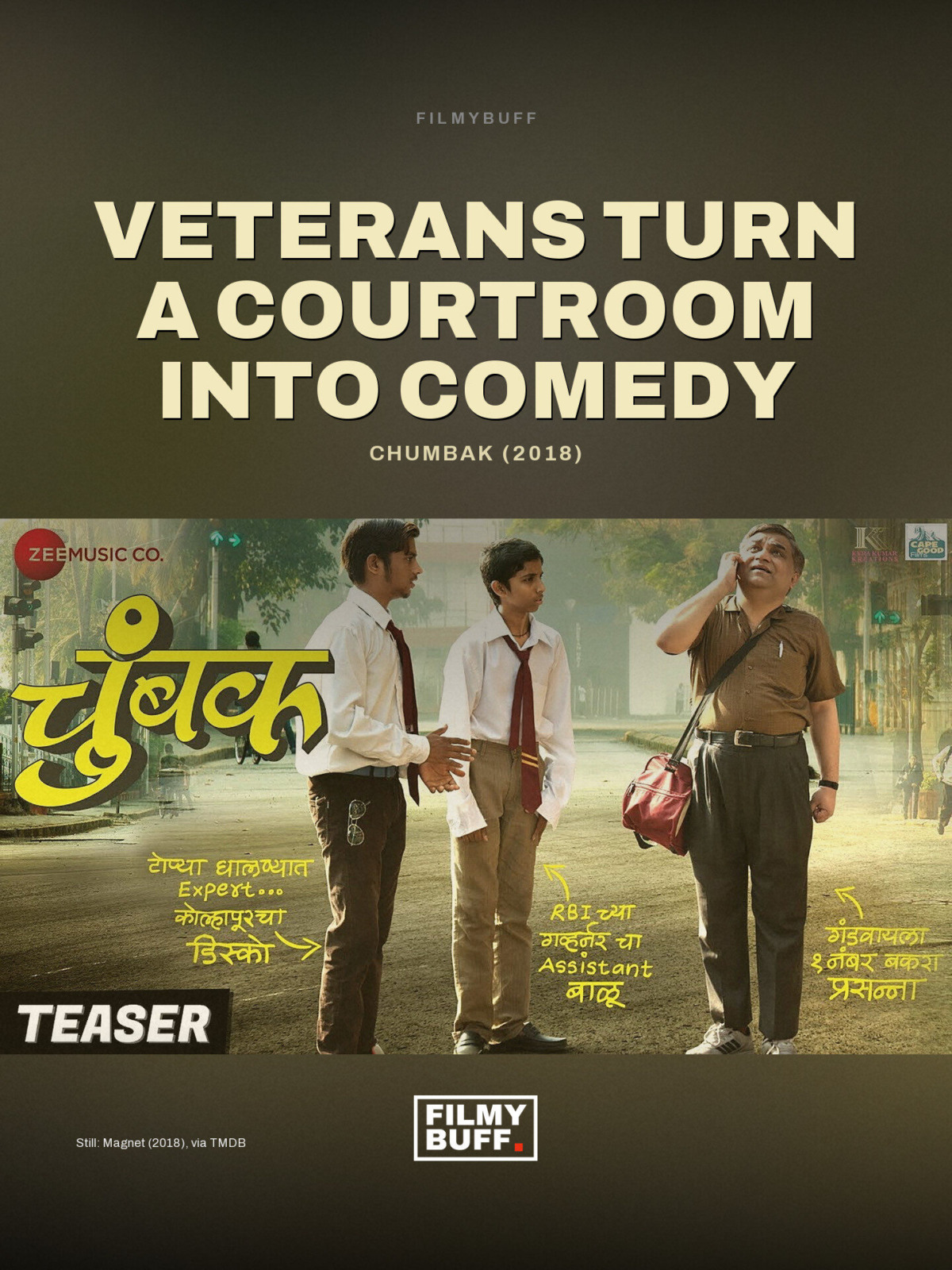
Chumbak has been winding a small misunderstanding tighter for most of its running time, and this late courtroom scene is where the knot gets pulled. The young protagonist’s future sits on which of two sharp adults can control the room. Neena Gupta and Deven Bhojani are the opposing voices, and neither has come to lose.
2. The turn: the beat where the scene changes gear, and how the film gets there
For the first half of the clip, the scene plays like a real hearing: evidence, objections, the cadence of a court. Then Bhojani repeats one of Gupta’s words back to her, slowly, as if he has caught her. The film gets there by cutting to her face and holding; that pause flips the register from legal to theatrical. From that point, every question is a dare.
3. The line: the line or the moment people quote, and why it lands
The moment people quote is not a long comeback; it is the small reply Gupta gives after Bhojani’s trap, a single word that sounds like agreement and lands as refusal. The writing keeps it plain, and the delivery turns it into a punchline. It lands because the scene has already taught us to read these two speakers as equals, so one word is enough to tip the room.
4. The performance: what the actor or actors do, precisely, that a lesser scene would not
Neena Gupta does her best work with stillness. She lets a bad argument pass in front of her face without flinching, and then she picks her response from a place of total calm. Deven Bhojani plays the fall beautifully: he does not crumble, but narrows his eyes, as if filing the loss for later. A lesser scene would have both of them shouting; this one wins on control.
5. The craft: the staging, the cut, the music, the sound, the camera, whichever carries it, with one specific choice named for each you mention
The staging is almost bare: two desks, no clutter, and just enough room to pace. The camera is a slow lateral push between the two speakers, so power moves through the frame like a ball in a rally. The edit holds on Gupta one beat longer after Bhojani’s turn, so we watch her decide not to answer with volume. The sound drops the courtroom murmur at the turn, leaving their voices and one chair creak to do the work. There is no musical flourish; silence becomes the scene’s percussion.
6. Why it travels: why this scene is the one people share, decades or days later
This scene travels because it does not need the rest of Chumbak to work. Two actors, one room, sharp timing: it is a complete piece of entertainment on its own. Fans share it as a craft study and as a reminder that comedy can be built from pauses, not pandering. It also has the rewatchable quality of a short duel: you return to watch the loser’s reaction as much as the winner’s line.
Watch the original: Netflix India on YouTube. Shown for review and comment; the rights stay with the makers.