The setup
By this point Ranga has already pulled the three boys into his orbit, and the scene works as a promise and a warning: he can be warm, but the warmth is not the whole man. The stakes are simple—everyone in this room believes they know exactly what kind of gangster Ranga is, and the next minute is about to correct them. The film is not hiding the turn; it is waiting for the right reason to light it.
The turn
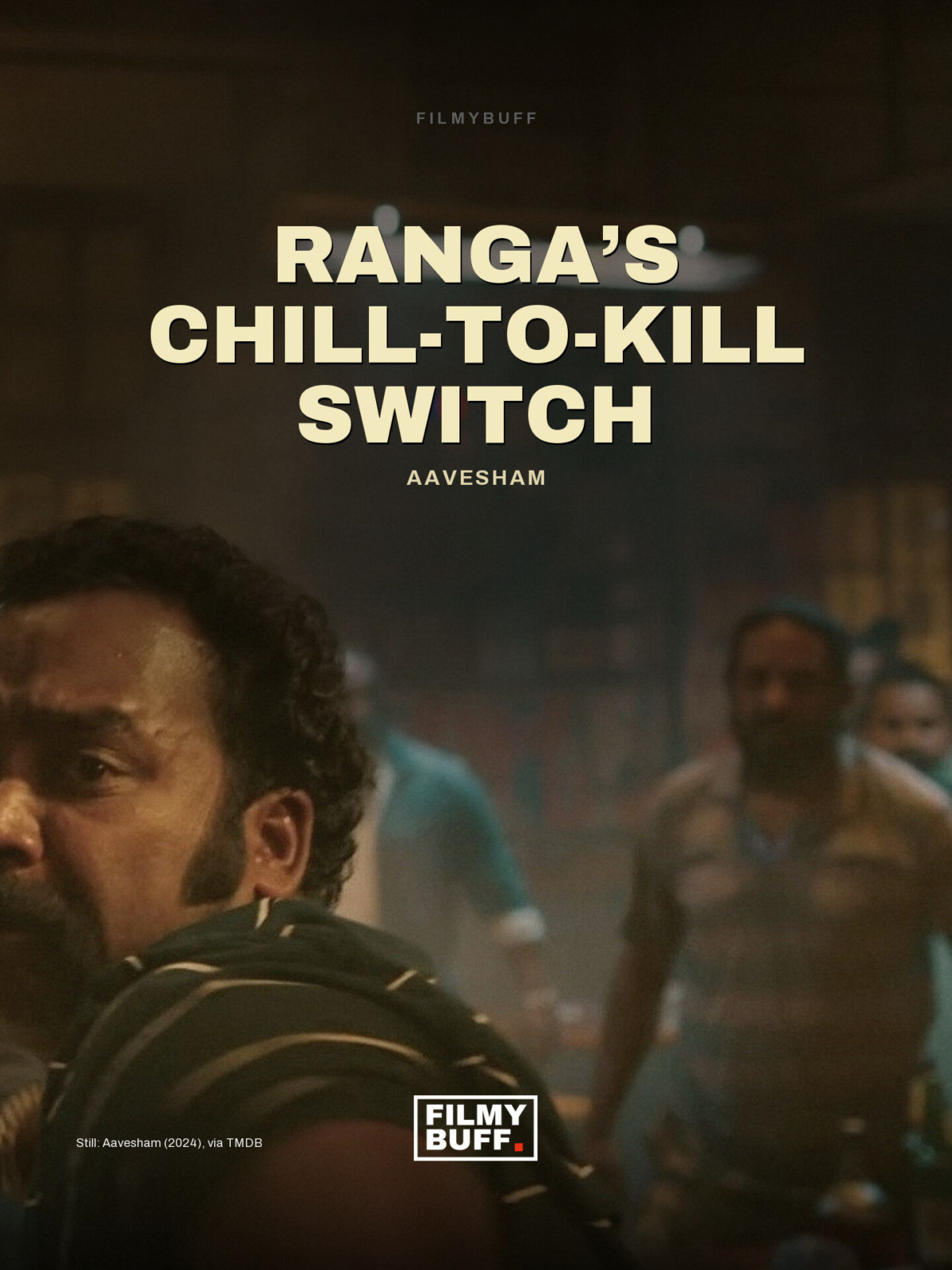
The gearshift is not a change in Ranga’s mood so much as a change in what the audience is allowed to see. He is all loose shoulders and an easy grin, then the room’s noise dips, a body steps into his space, and the playfulness stops being a joke. Aavesham gets there with patience: it lets the chatter run a beat too long, keeps Ranga’s smile up, and cuts on the first impact so the switch lands as a physical event.
The line
Most people share the beat just before the swing, or the small laugh Ranga lets out after the first body drops. The writing stays spare, so that laugh does the work of a one-liner: it reframes the violence as a man clearing a problem, not losing his temper. Timing does the rest—Fahadh lets it arrive a half-second later than expected, when the audience is still holding its breath.
The performance
Fahadh Faasil never plays the turn as a reveal. A lesser actor would frown, pause, or shake off the last trace of charm. Fahadh keeps the same open face almost all the way in; the violence only narrows his eyes and drops his chin, not his personality. He uses his hands with a strange domesticity, like a man clearing a table, so the fight feels less choreographed and more like a chore he has decided to finish.
The craft
Staging keeps the fight close, with furniture as obstacle, and the specific choice is the narrow lane between two tables that Ranga steps into before the first strike. The camera stays low and close; its specific choice is the quick push-in on his face at the turn, rather than a wide shot that would make the fight a spectacle. Sound does the heaviest lifting—the room’s ambient murmur drops out, and the specific choice is the clatter of a metal chair after the second hit. The edit cuts on action, not after it, with a two-frame hold on a falling body before the next swing.
Why it travels
The scene travels because it gives fans a complete shape in under a minute: warmth, warning, explosion, release. It is not the longest or most elaborate fight in Aavesham, but it is the one that shows who Ranga is, and the switch feels like a magic trick fans want to show someone else. People share it because you get to watch a friend react to the exact beat where the smile stops meaning safe.
Watch the original: Prime Video India on YouTube. Shown for review and comment; the rights stay with the makers.