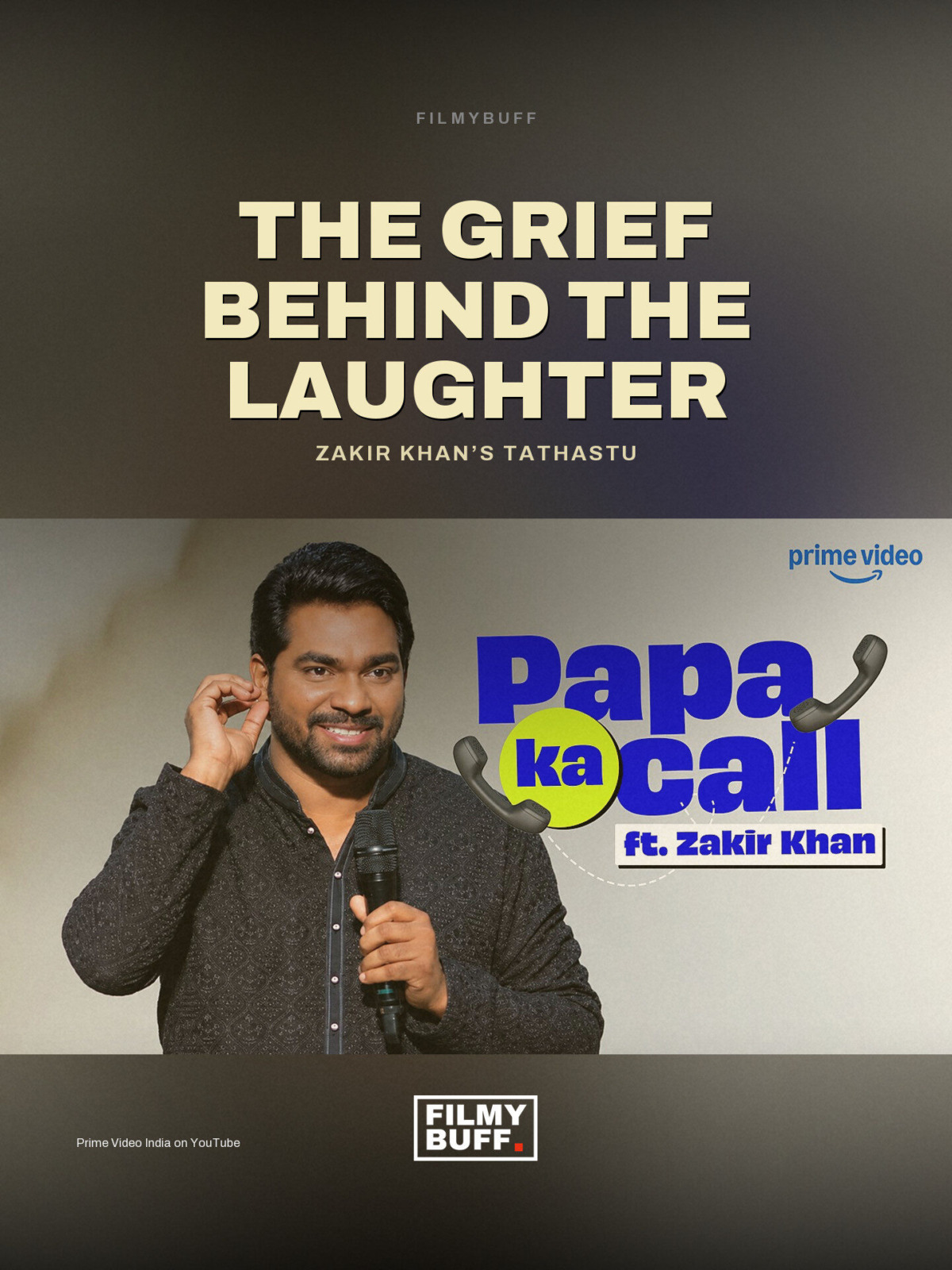
I have seen a hundred stand-up specials end on an emotional note, but nothing prepared me for the moment in Tathastu when Zakir Khan says, plainly, “Abba nahi rahe.”
The setup
By this point in the special, Zakir has been building family stories—his father’s wisdom, his mother’s warnings, his own flaws—so the room is warm and loose. This monologue arrives near the end, and the stakes are simple but huge: he is going to tell us the loss behind the laughter, and he has to keep us with him without turning a comedy show into a eulogy.
The turn
The change comes not with a big announcement but with a small pause. He drops the comic exaggeration, softens his voice, and the audience slowly realises he is not setting up a punchline. The special gets there by holding the silence a beat longer than is comfortable; the laughter doesn’t fall away at once, it dissolves.
The line
“Abba nahi rahe” lands because it is plain, unhurried and repeated. It is not a crafted joke; it is a fact he keeps saying to make it real. The writing trusts the audience to feel the weight, and the timing—right after a lighter family bit—makes the line land like a door quietly closing.
The performance
Zakir does the almost impossible here: he stays light on his feet while letting his eyes go somewhere else. He doesn’t cry on cue; he smiles at the absurdity of grief, touches his chest as if checking the ache, and lets his hand drop. A lesser performer would push for tears or apologise for getting serious. He just keeps talking, the way you do when you are scared to stop.
The craft
The filming understands that this moment needs room. The camera chooses a slow push from a wide stage shot to a medium close-up, so the audience disappears for a second and it is just him. The cut is patient: it holds on Zakir while he hesitates, then takes a single reaction shot of someone wiping an eye only after the moment has landed. The sound drops the room ambience down, and the music stays out of the way for most of the beat, entering only softly after the turn. That restraint is the whole craft.
Why it travels
People share this because it is not a joke about loss; it is loss surviving inside a joke. It works for anyone who has sat in a car after bad news and not known how to answer “How are you?” “Abba nahi rahe” becomes shorthand for a private grief spoken in public, and that is why it cuts through.
Watch the original: Prime Video India on YouTube. Shown for review and comment; the rights stay with the makers.