Twenty-five years on, Harry Potter and the Philosopher’s Stone still feels like the moment a generation stepped through the wall at King’s Cross. The 2001 fantasy film directed by Chris Columbus and written by Steve Kloves, based on J. K. Rowling’s 1997 novel, was the first instalment in the Harry Potter series and introduced Daniel Radcliffe, Rupert Grint and Emma Watson. Its production story is full of near-misses and small compromises that quietly shaped the franchise.
One word, two takes
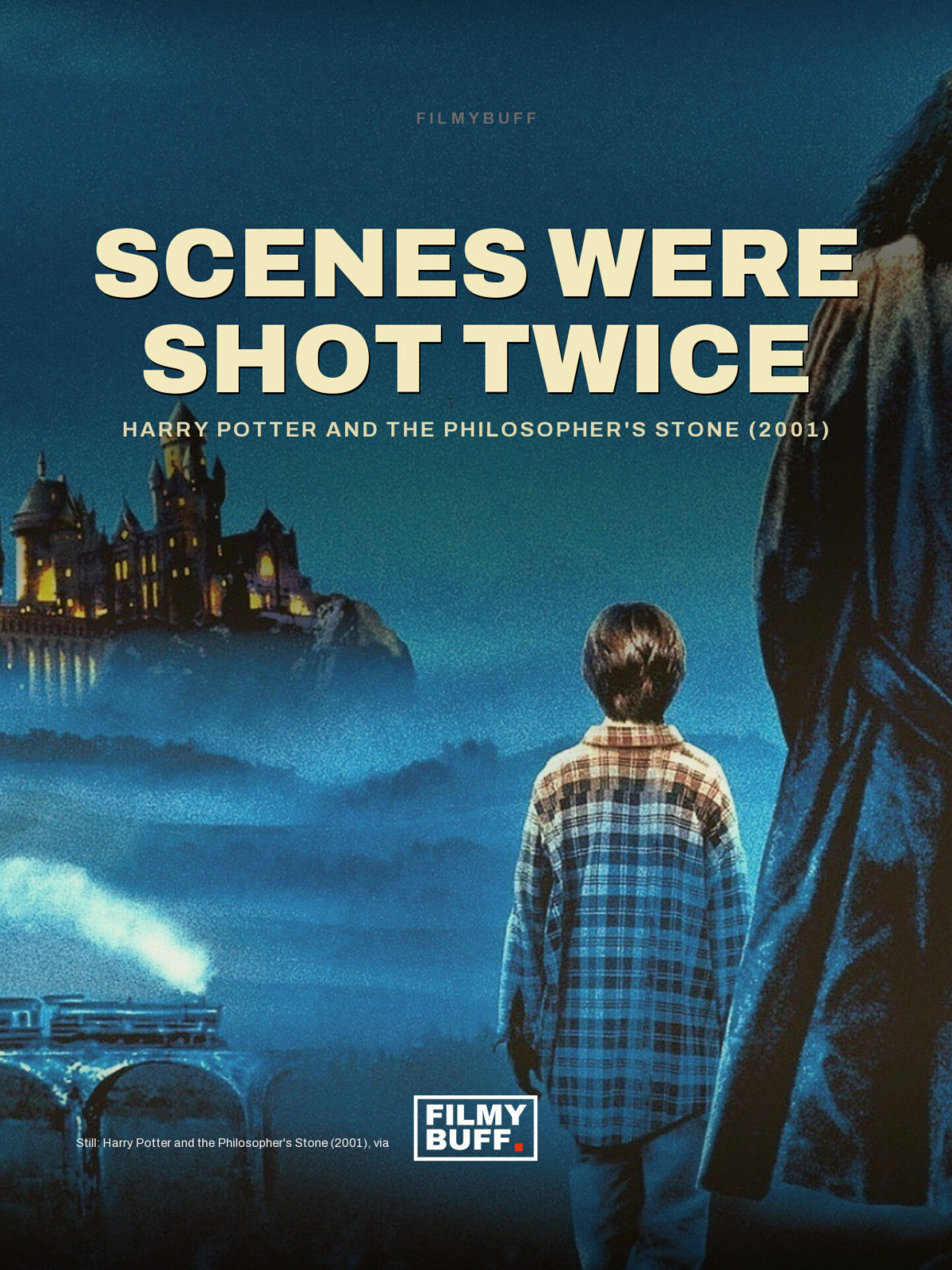
The film is known as Harry Potter and the Sorcerer’s Stone in the United States, India and the Philippines. Because the American title was different, every scene that mentions the philosopher’s stone by name had to be shot twice: once with the actors saying “philosopher’s” and once with “sorcerer’s”. Filming concluded on 23 March 2001, with final work in July 2001, but that little word left a double footprint.
The British-only rule
When Rowling sold the rights, she demanded the cast stay strictly British and Irish. Robin Williams was interested in playing Hagrid but was turned down because of that rule, which Chris Columbus was determined to maintain. It became one of the franchise’s defining boundaries.
A cathedral said no
Canterbury Cathedral was considered as a possible Hogwarts but rejected Warner Bros’ proposal due to concerns about the film’s “pagan” theme. Alnwick Castle and Gloucester Cathedral were eventually selected as the principal locations for Hogwarts, with some scenes filmed at Harrow School. Durham Cathedral supplied corridors and classrooms, Oxford’s Divinity School became the hospital wing, and Duke Humfrey’s Library stood in for the Hogwarts Library.
Privet Drive cost more
Filming for Privet Drive took place on Picket Post Close in Bracknell, Berkshire. The street shoot took two days instead of the planned single day, so payments to the street’s residents were correspondingly increased. Later Privet Drive scenes moved to a constructed set at Leavesden Film Studios, which proved cheaper than filming on location.
Spielberg’s animated what-if
Steven Spielberg initially negotiated to direct and developed a second draft of the script with Steve Kloves. He wanted the adaptation to be an animated DreamWorks Animation film, with American actor Haley Joel Osment providing Harry Potter’s voice. He later contended it was like “withdrawing a billion dollars and putting it into your personal bank accounts”, and Heyman recalled that Spielberg decided to direct A.I. Artificial Intelligence instead.
Dumbledore and Snape near-misses
Tim Roth was the original choice for Snape, but he turned it down for Planet of the Apes. Sean Connery and Christopher Lee were offered Dumbledore; Lee declined for The Lord of the Rings: The Fellowship of the Ring, and Patrick McGoohan cited health reasons. By August 2000 Alan Rickman and Richard Harris were in final talks and were confirmed later that month.
Casting chaos
Casting the lead roles was the hardest part. Susie Figgis left the production on 11 July 2000, complaining that Columbus did not consider any of the thousands of children they had auditioned “worthy”. She quit over disagreements about who should play Harry, with rumours that Columbus was considering Americans. On 21 August 2000 Daniel Radcliffe, Rupert Grint and Emma Watson were selected as Harry, Ron and Hermione.
A £1 million start
In 1999 Rowling sold Warner Bros the rights to the first four Harry Potter books for a reported £1 million. Two British film industry officials requested that the film be shot in the United Kingdom, offering help with locations, Leavesden Film Studios and changes to child labour laws. Principal photography began on 29 September 2000 at Leavesden, with Goathland railway station filming on 2 October 2000. The young cast filmed for four hours and then did three hours of schoolwork, and developed a liking for fake facial injuries from the makeup staff.
Which of these production secrets would you save for your next Potter rewatch? Tell us the moment that still gets you.
Facts from Wikipedia: Harry Potter and the Philosopher’s Stone (film), available under CC BY-SA 4.0.
Film images from TMDB. This product uses the TMDB API but is not endorsed or certified by TMDB.