Fifteen years after Haywire hit theatres on January 20, 2012, Steven Soderbergh’s lean action thriller still feels like a detour with a point of view. These eight behind-the-scenes details trace how the film came together, from the gym to the location scout.
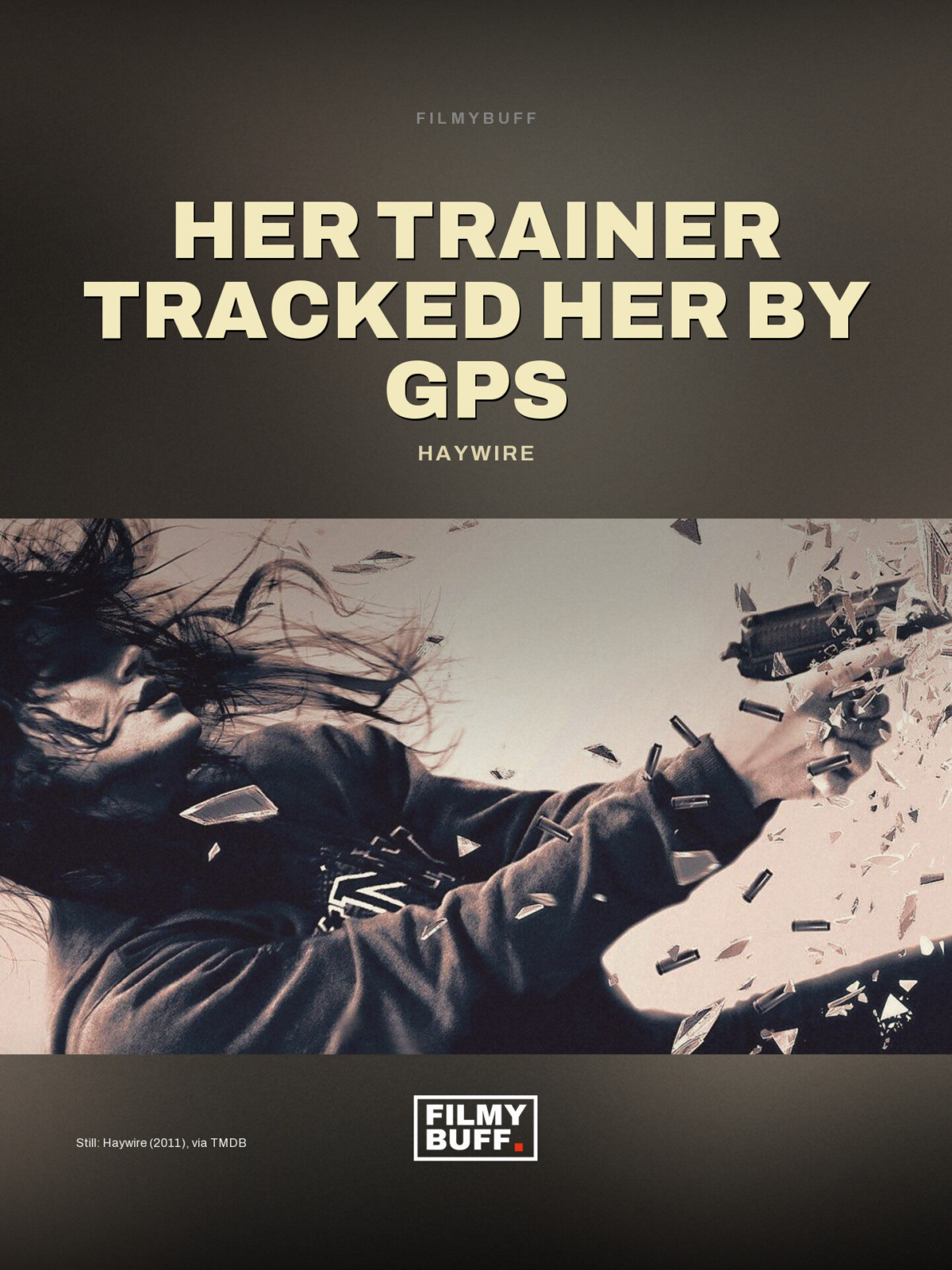
Her trainer tracked her by GPS
In preparation for her role, Gina Carano underwent a six-week intensive tactical training course with former Duvdevan Unit officer Aaron Cohen. During a particularly harrowing two-week period when Cohen was teaching Carano the art of surveillance and counter-surveillance, he and his team tracked her via a GPS system installed in her car.
Carano did her own stunts
The film stars Gina Carano as a black ops agent who is betrayed by her employers and targeted for assassination in a conspiracy she is forced to unravel. Carano, a mixed martial arts fighter, performs her own stunts in the film.
She trained six hours a day
Carano spent three hours a day in stunts and three hours a day with Cohen. Cohen, a former Duvdevan Unit officer, has a cameo appearance in the finished film.
Ireland was the main set, on a $23 million budget
The screenplay was written to be shot in Dublin, and principal photography spanned from February 2, 2010, to March 25, 2010. It was shot mostly in Ireland on a budget of $23 million.
The film borrowed homes of Ireland’s ‘Arch Rebels’
Two locations included the former homes of Ireland’s Leeson family, who as the Earls of Milltown were once described as ‘Arch Rebels’ of the ascendancy. These included the interior of palatial Russborough House, where Paul and Mallory attend a party, and the exterior of the Kildare Street and University Club, which Mallory passes while being tailed at St. Stephen’s Green.
The delay gave us Contagion first
Haywire was originally set to be released in late 2010, but re-shoots and a change in distributor from Lionsgate to Relativity Media delayed it for more than a year. During the intervening period, Soderbergh filmed and edited Contagion, which was ultimately released over a month in advance.
Soderbergh fought to keep the fights realistic
Soderbergh reportedly clashed with Lionsgate, which wanted a more action-centric film in the vein of the Bourne series, while Soderbergh had intended a spy thriller interspersed with lengthy, realistic fight scenes. Following the change in distributor, his re-shoots and re-edits focused on reshaping the film to be more in line with his original vision.
Critics liked it far more than audiences
Rotten Tomatoes gives the film a score of 80% based on 199 reviews. The site’s critical consensus calls it ‘a fast-paced thriller with a top-notch cast and outstanding direction from Steven Soderbergh.’ Audiences polled by CinemaScore gave the film an average grade of ‘D+’ on an A+ to F scale.
Which Haywire fact would you save: the GPS training, the Arch Rebel locations, or the Bourne-style studio clash?
Facts from Wikipedia: Haywire (2011 film), available under CC BY-SA 4.0.
Film images from TMDB. This product uses the TMDB API but is not endorsed or certified by TMDB.