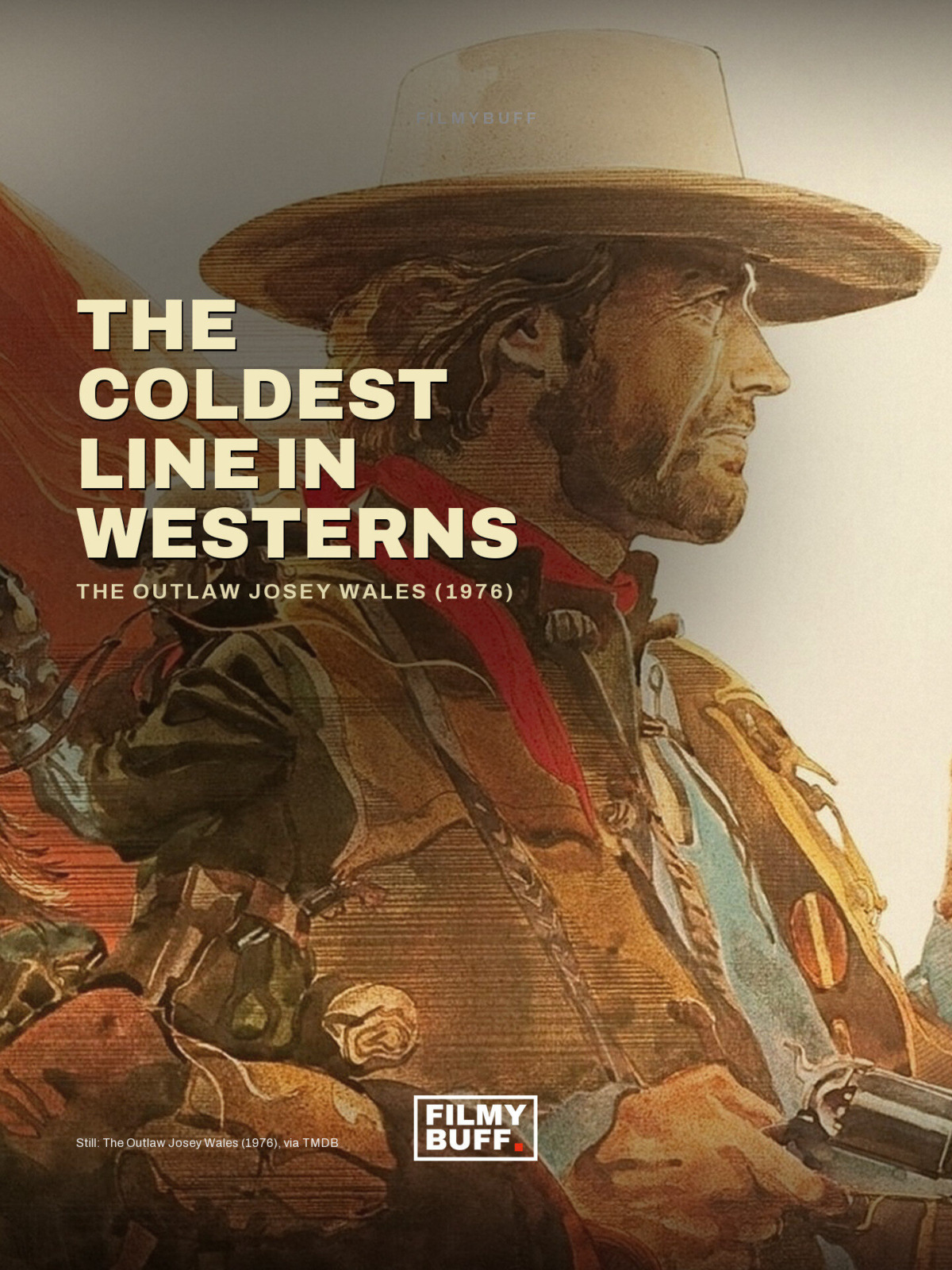
The first time I saw the last reel of The Outlaw Josey Wales, I thought I knew exactly how it would go. A man walks into a saloon, the bad men stand up, the room explodes. What I didn’t expect was how much of the scene would be about waiting—and how little Josey Wales would have to do to take it over.
The setup
This is the end of a long vengeance trail. Josey Wales has spent the film as a wanted man, moving from one borrowed home to another, and Captain Terrill is the man who made him that way. When Josey walks into the saloon, Terrill and his Redlegs are already there, and the film makes it clear this meeting is not an accident.
The turn
The scene changes gear the moment Josey stops being a moving target. He doesn’t plead, and he doesn’t announce himself. He lets the room register who he is, then asks a question that is really a countdown. That’s the turn: from hunter and hunted to two men who both know only one of them is leaving.
The line
“Are you gonna pull those pistols or whistle Dixie?”
It lands because it is not a catchphrase. Josey is not performing for an audience; he is giving Terrill’s men permission to either act or stand down. The phrase mocks their nerve and their cause at once, and Eastwood delivers it with almost no rise in his voice, like a man too tired to waste a syllable.
The performance
Eastwood’s genius here is stillness. Watch his eyes, not his gun: they move from man to man while his body stays loose, so Terrill’s men feel watched before they feel threatened. A lesser scene would have him snarl. Instead, Josey looks like a man doing arithmetic, and that calm is what makes the room flinch.
The craft
Eastwood keeps the camera low and patient, holding the men in the same frame so we can see hands, hips, and glances. The cut comes only when the first pistol clears leather, which makes the violence feel like a consequence rather than a stunt. Sound does the rest: no score under the exchange, just the creak of the floor, a glass, and leather on a pistol grip.
Why it travels
This scene is the one fans clip because it is Western cool without apology. It has a quotable line, a brooding score, and the genre’s finest trick: making one quiet man more magnetic than a room full of guns. Decades later, it still gets shared as shorthand for how to end a story—by walking in, asking the right question, and letting the cut answer it.
Watch the original: Warner Bros. Classics on YouTube. Shown for review and comment; the rights stay with the makers.