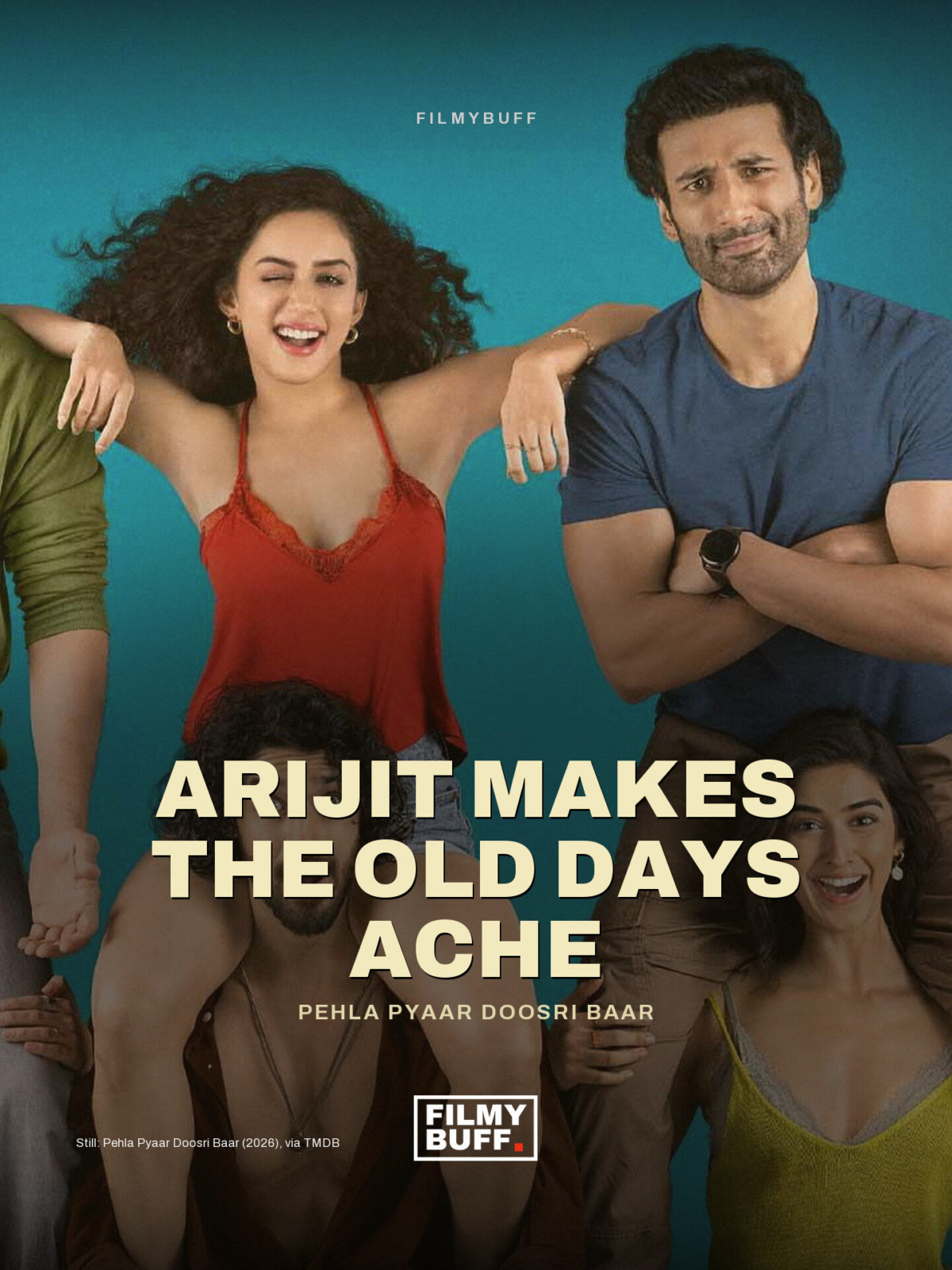
The setup
Purane Din arrives as the film’s romantic centrepiece, after the title has already promised a second chance but before the leads have decided to stop protecting themselves. The stake is not whether they loved each other; it is whether the old days can survive the people they have become.
The turn
The scene changes gear on a single shift in the arrangement. The opening piano keeps the memory at arm’s length, and then the percussion drops away just before the chorus, leaving Arijit Singh’s voice exposed. That is the beat where the song stops being about the past and becomes an invitation in the present. The camera matches the change by moving from a framed distance to a tight two-shot, so the turn lands in the sound and the blocking together.
The line
The line people quote is the title itself: “Purane din.” It lands because it is not sung like a lament. Arijit lets the phrase fall, almost spoken, so the words carry recognition instead of regret. The writing does its work by trusting the repetition; each return of the phrase means something slightly different, until “the old days” sound less like a memory and more like a plan.
The performance
The leads do most of the acting in the silences. A lesser scene would have them run toward each other. Here the woman hesitates with her hand near her mouth, and the man waits a beat too long before stepping closer, which makes the song feel like a conversation rather than a music cue. That held tension is the performance; the voices are in the music, and the bodies are the stakes.
The craft
The craft is carried by patient, deliberate choices. The staging keeps a window between them in the first verse, then removes it as the chorus lifts. The cut holds on one sustained two-shot long enough for the hesitation to register, and the sound design keeps the room tone present under the track so the scene does not float away from the film. The camera’s specific choice is a push-in during the second antara, not toward the singer but toward the actress, so the audience reads the song through her face. Each choice named here does the same job: it turns a music video into a scene.
Why it travels
It travels because it gives audiences the feeling the whole genre promises: a love song that seems to remember their own past. The melody is simple enough to hum after one listen, the image is romantic enough to share, and the title phrase works as a caption for old photographs, which is exactly what a scene needs to become a mood decades or days later.
Watch the original: T-Series and Luv Films on YouTube. Shown for review and comment; the rights stay with the makers.