Waking Life turns 25 this week, and Richard Linklater’s rotoscoped dream film still feels like a dare no one has quite repeated. It premiered at the Sundance Film Festival in January 2001 and was given a limited release in the United States on October 19, 2001. Written and directed by Linklater, it explores the nature of reality, dreams and lucid dreams, consciousness, the meaning of life, free will, and existentialism.
Built on standard Macs in Rotoshop
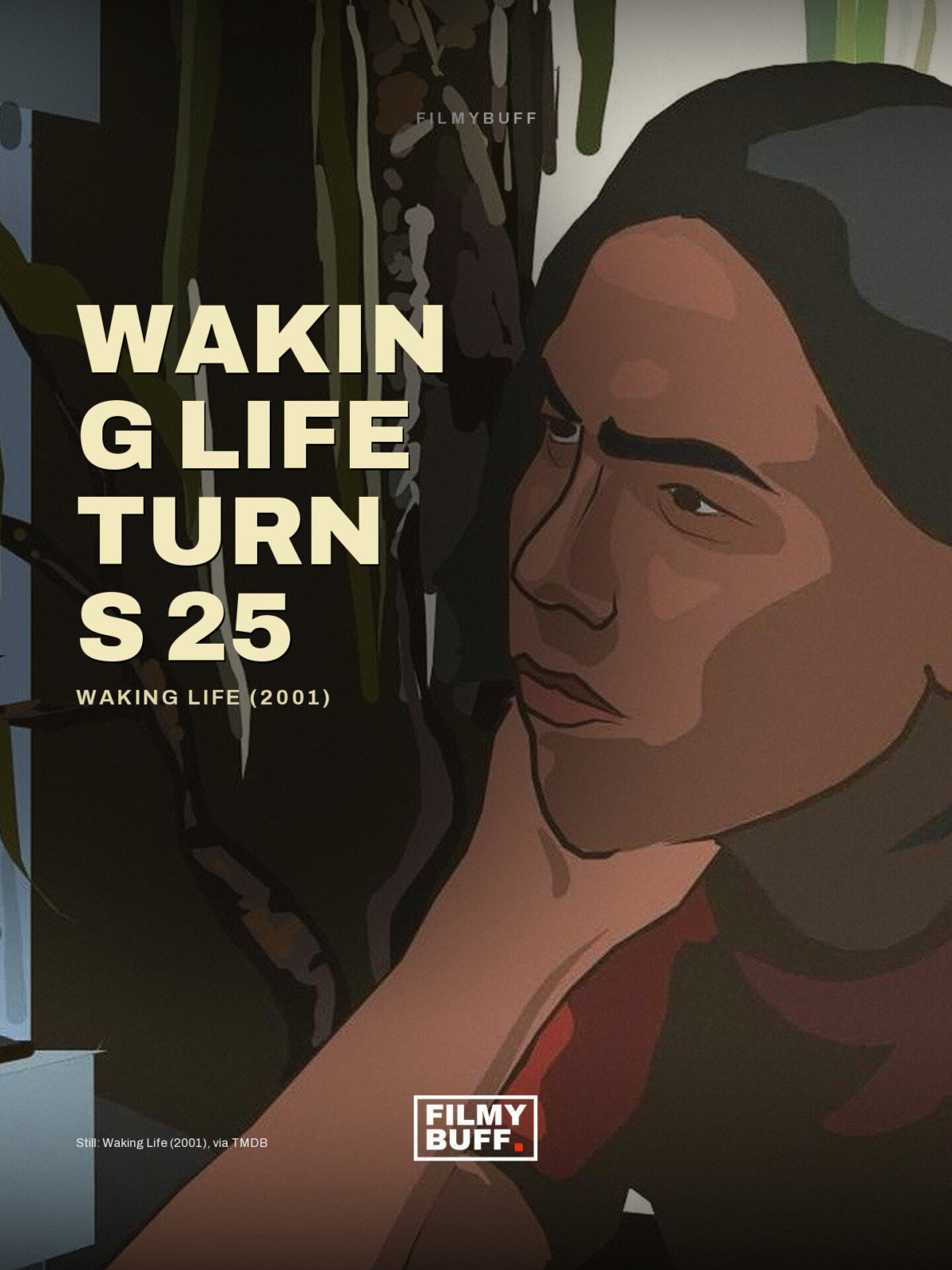
The animation was mostly produced using Rotoshop, a rotoscoping program designed specifically for the production by Bob Sabiston. Animators used standard Apple Macintosh computers, and Linklater employed a variety of artists so the movie’s feel continually changes. That range gives the film its surreal, shifting dreamscape.
Rotoscoping made it a shifting dreamscape
Linklater used an animation technique based on rotoscoping, in which animators overlay the live-action footage with animation that roughly approximates the images actually filmed. The result was a realistic film about an unreality: Linklater said the film had to be a realistic unreality.
Hawke and Delpy returned from Before Sunrise
The live-action footage was shot by Linklater and Palotta in Mini DV camera with real actors, including Ethan Hawke and Julie Delpy. They reprise their characters from Before Sunrise in one scene. Filming ran over six weeks, starting in August 1999.
A loose script kept changing
According to Wiggins, there was a loose script that greatly changed during shooting. The original scenes of the footage later featured as extra editions in DVD.
The idea waited 20 years
In a 2001 interview, Linklater estimated the idea for the film came before he was even interested in film, probably 20 years ago. For a while he felt it didn’t quite work, calling it too blunt, too realistic.
Ebert gave it four stars
Roger Ebert of the Chicago Sun-Times gave the film four stars out of four, calling it “a cold shower of bracing, clarifying ideas.” He later included the film on his list of Great Movies.
Critics rated it universal acclaim
On Rotten Tomatoes, the film has an approval rating of 81% based on 145 reviews, with an average rating of 7.40/10. Metacritic assigned it a score of 85 out of 100, based on 32 critics, indicating universal acclaim.
Linklater reused the technique
Linklater used this animation method again in his 2006 film A Scanner Darkly. The American Film Institute recognized the film in its 2008 list, where it was nominated in the animation film category.
An awards run worth saving
Waking Life won the National Society of Film Critics award for Best Experimental Film. It also won the New York Film Critics Circle award for Best Animated Film and the Venice Film Festival CinemAvvenire award for Best Film.
So, over to you: which Waking Life fact do you return to most?
Facts from Wikipedia: Waking Life, available under CC BY-SA 4.0.
Film images from TMDB. This product uses the TMDB API but is not endorsed or certified by TMDB.