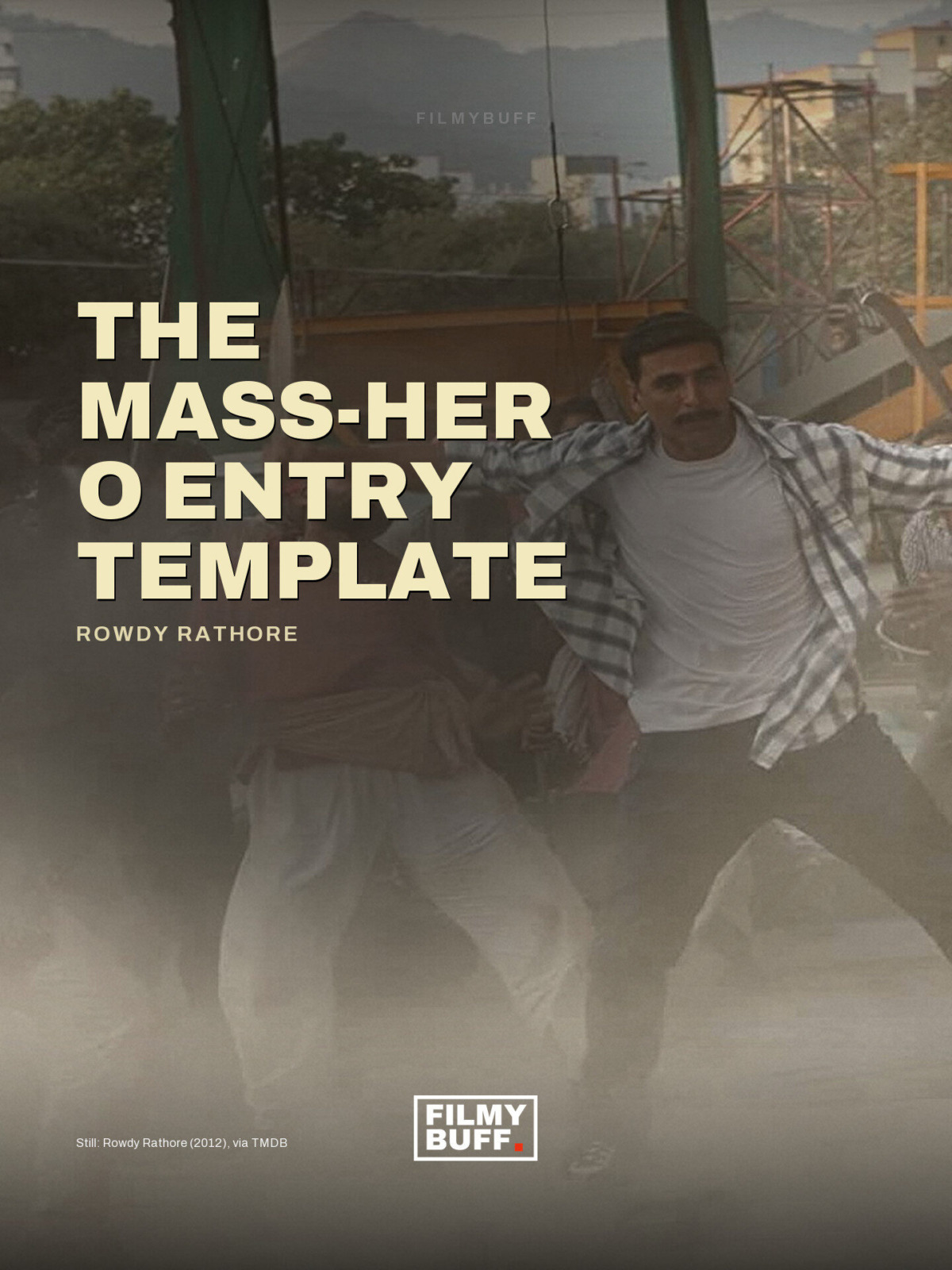
I’ve watched this entry more times than I should admit, and it still works like a compact masterclass in mass-hero packaging. The clip plays at the top of the page, so let’s take it apart beat by beat.
1. The setup: where the scene sits in the film and what is at stake
By this point in Rowdy Rathore, the village is under a local goon’s thumb, and a police officer who actually does his job feels like a rumour. Vikram Rathore arrives as the new inspector, so the scene has to introduce him as a force of nature while telling us nobody in the town is ready for what he is about to do. No spoilers beyond that—just stakes: law and order walks in with a pair of sunglasses and a very specific stride.
2. The turn: the beat where the scene changes gear, and how the film gets there
The scene starts like a familiar B-plot: goons run the platform, a victim flinches, and the background score hums with danger. The turn is not a punch or a piece of dialogue; it is the jeep braking and the crowd parting before Vikram’s boots even hit the ground. The film cuts from rattled chaos to a kind of delighted slow-motion, and the scene stops being about rescue—it becomes a star announcement.
3. The line: the line or the moment people quote, and why it lands
“Main hoon Vikram Rathore.” It is not clever writing in a winking way; it is a declaration that works because the silence before it has already done the heavy lifting. The timing matters: he does not shout it, he says it after proving he is the only calm man in the frame. The delivery is almost offhand, which makes it sound less like a threat and more like weather arriving.
4. The performance: what the actor or actors do, precisely, that a lesser scene would not
Akshay Kumar’s entry is built on restraint inside excess. He does not rush the walk; he keeps his shoulders loose and his hands doing very little, so when he finally moves, the violence feels earned. A lesser scene would have him sneering or shouting through every beat; here he saves the anger, and small adjustments—the way he removes his sunglasses, the little nod before a throw—make the moment feel like an actor who knows exactly how much the camera will forgive. He also gives the goons room to be terrified, which is crucial: his performance is the punchline, but their reaction is the setup.
5. The craft: the staging, the cut, the music, the sound, the camera, whichever carries it, with one specific choice named for each you mention
The craft is working in layers. The staging keeps Vikram on the high side of the platform so he is physically looking down at the goons before the fight begins. The cut switches from fast inserts of the goons to a slow, full-body push-in on Vikram, telling us whose rhythm matters. The music drops into a staccato riff that acts as a theme for the character rather than the plot. The sound of the jeep braking is sharp and close. The camera tilts up as he lands, using the low angle not for drama but for legitimacy: this is the angle the whole village is looking from.
6. Why it travels: why this scene is the one people share, decades or days later
It travels because it is a complete personality in 90 seconds. You don’t need plot, context, or even the film’s title to understand who Vikram Rathore is. The scene works as a clip, a meme, and a template for mass-hero energy, because every frame says the same thing: a hero does not ask for space; he walks into it.
Watch the original: Prime Video India on YouTube. Shown for review and comment; the rights stay with the makers.