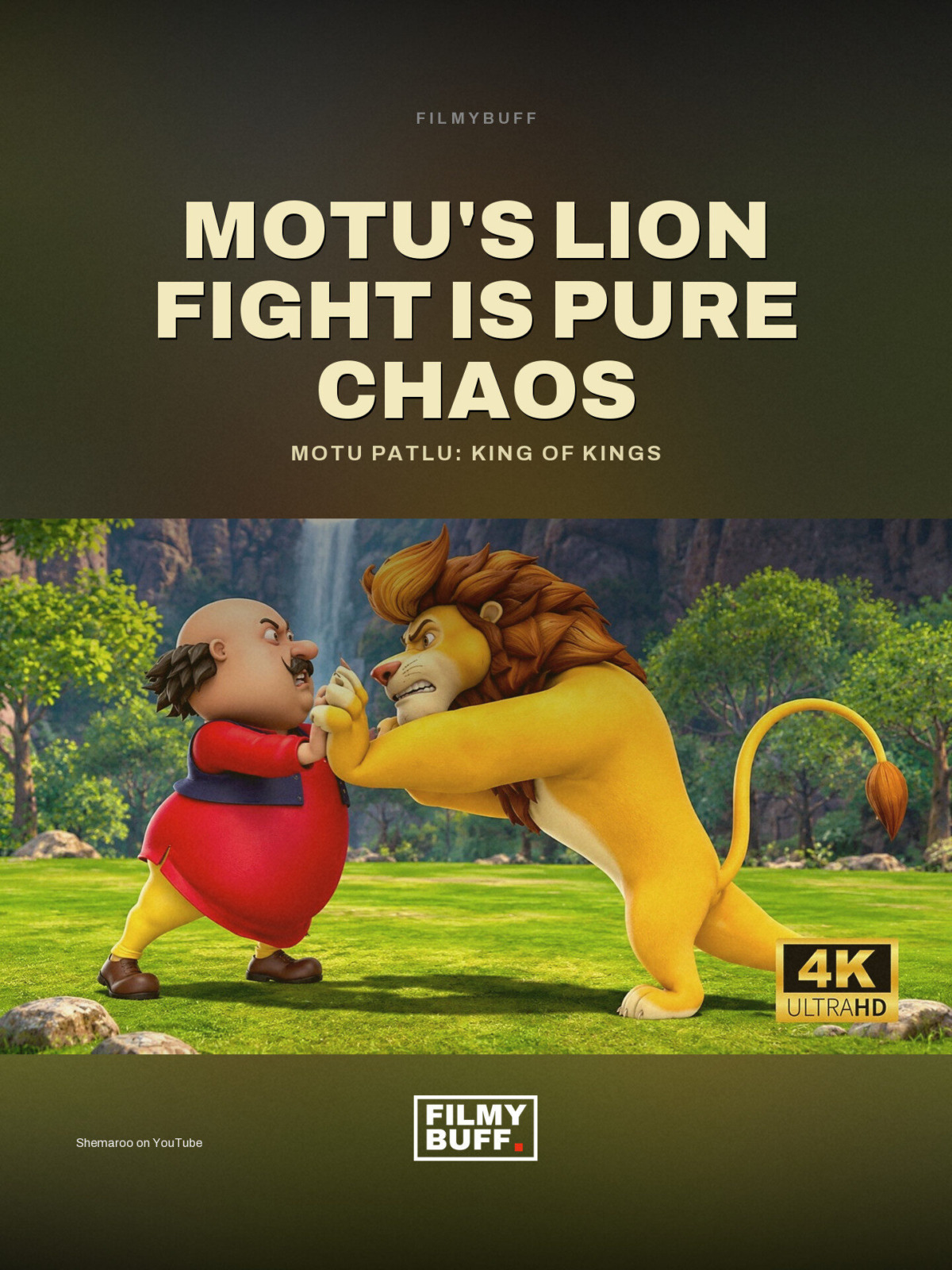
1. The setup: where the scene sits in the film and what is at stake
By this point, Motu has blundered into a face-off with Asli Sher, the real lion, and there is no clean way out. The scene sits inside the film’s action stretch, and the stakes are survival: he has to face a predator with nothing but panic and luck. It is less a fight than a very lopsided game of keep-away.
2. The turn: the beat where the scene changes gear, and how the film gets there
The turn is not the moment Motu lands a hit. It is the moment Asli Sher stops being only a threat and becomes a scene partner. The film gets there by cutting from Motu’s wide-eyed terror to the lion’s almost bored reactions. Suddenly the lion is not chasing a meal; he is dealing with a nuisance, and the scene flips from chase comedy to a rhythm-based slapstick duel.
3. The line: the line or the moment people quote, and why it lands
The moment people quote is not exactly a line; it is Motu’s yelp when he realises Asli Sher is standing right behind him. It lands because the film earns the pause before it. The writing gives him just enough time to feel safe, the timing lets the silence hang for half a beat, and the delivery is a full-body panic note rather than a standard cartoon scream.
4. The performance: what the actor or actors do, precisely, that a lesser scene would not
Motu’s voice performance keeps the fear honest even when the action gets absurd. He never becomes a hero mid-scene; he negotiates, pleads, and tries to reason with the lion between dodges. The lion, in contrast, gets tiny, disbelieving pauses that make him feel like an exasperated straight man. A lesser scene would have made Motu suddenly competent. This one lets him stay the lovable underdog.
5. The craft: the staging, the cut, the music, the sound, the camera, whichever carries it
The staging does the heavy lifting: the scene keeps giving Motu small objects to hide behind that are just too thin to cover him. The cut is where the comedy lives, because the film repeatedly cuts from Motu’s confident smile to the lion’s blank stare before the panic sets in. The music drops out for the big stings and returns with a bouncy, circus-like theme. The sound design adds claws scrabbling on the ground, so the danger stays physical even when the comedy is broad.
6. Why it travels
This is the scene people share because it is pure, exportable Motu Patlu: no plot baggage, no deep lore, just a very round man trying to outwit a real lion through sheer flailing. It works for a six-year-old seeing it fresh and for a nostalgic adult remembering when the film felt huge. The clip is easy to quote, easy to react to, and every rewatch rewards you with a new little reaction shot you missed.
Watch the original: Shemaroo on YouTube. Shown for review and comment; the rights stay with the makers.