The setup
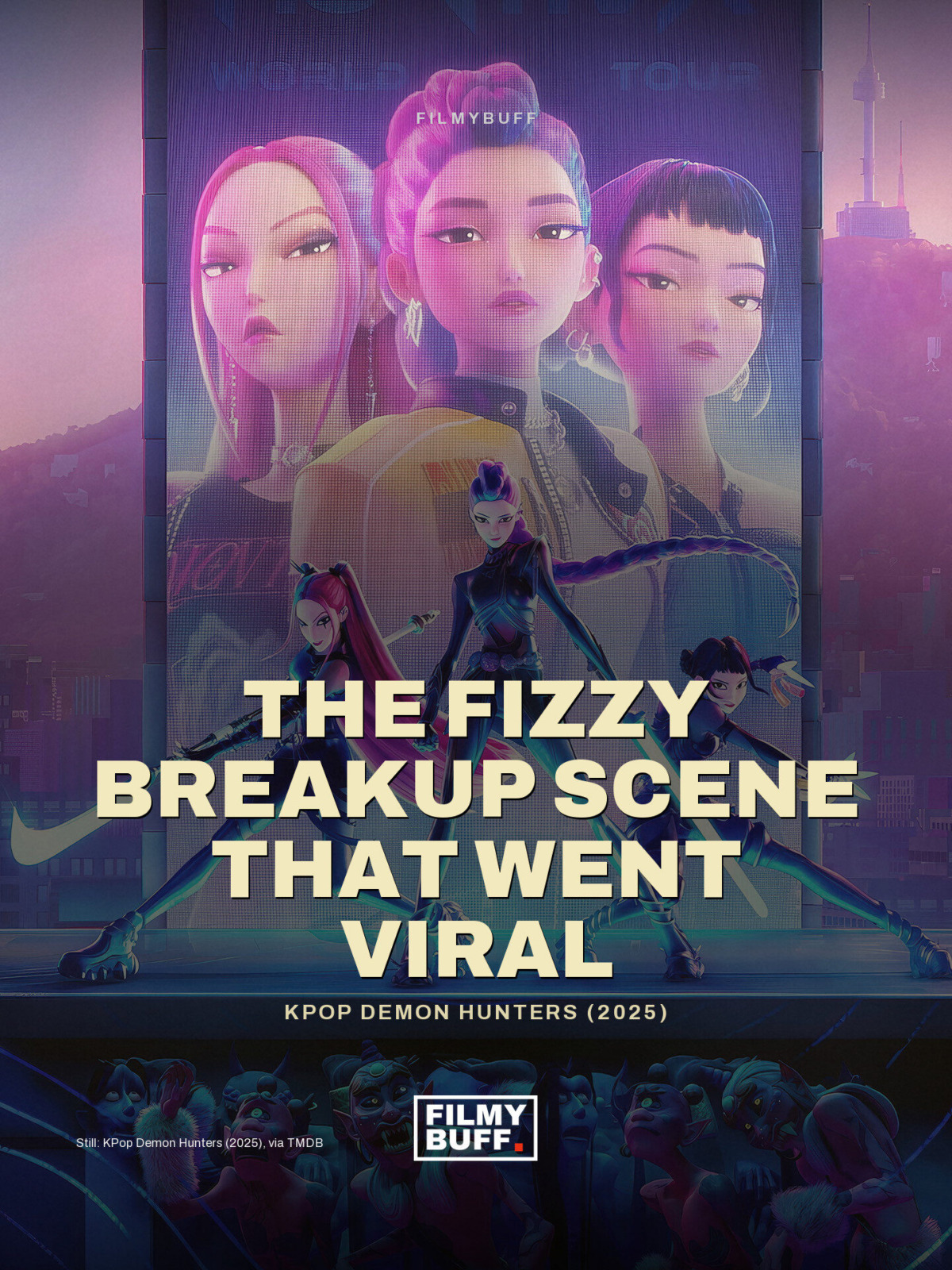
Halfway through KPop Demon Hunters, after a mission goes sideways and the team splinters, our lead is left in a neon-lit dorm room with a broken heart and a demo track. The scene is the film’s first full musical number, and the stakes are simple: if she can’t turn her pain into a hook, she can’t face the demon that feeds on heartbreak. It’s a pop exorcism in waiting.
The turn
The song starts as a ballad—bare piano, choked vocals, the colors drained to gray. Then, on the pre-chorus, a single soda can fizzes on the nightstand. The beat drops, the animation snaps from muted to candy-bright, and the room explodes into bubbles. That gear shift doesn’t just change the song; it changes the physics of the scene, and the character realizes her heartbreak is a weapon.
The line
“My heart’s a soda pop, you shook it till I dropped / Now I’m fizzy, I’m free, watch me overflow.” It’s the chorus, delivered with a wink at the camera. The writing lands because it turns a sad metaphor into a triumphant one; the timing lands because it arrives exactly when we think the song will stay wounded. The delivery sells it with a grin that says this breakup didn’t break her.
The performance
The voice actor does something lesser performances skip: she lets the first verse wobble. She doesn’t belt. She cracks on “dropped,” then catches herself. When the beat kicks in, her voice doesn’t just get louder—it gets looser, almost laughing. The animators match it with micro-movements: a shoulder roll, a half-spin, a flick of hair that’s all defiance. It’s a full-body conversion from victim to star.
The craft
Staging: the bedroom transforms around her, with furniture rearranging itself into a stage, but the camera stays on her face for the first three beats of the chorus. Cut: the editor holds on that smile for a full second longer than expected, letting the audience settle into the joy. Music: the production layers a fizzy synth line under the bass drop, mimicking carbonation. Sound: the bubble pops are timed to the snare. Camera: a slow push-in during the bridge, then a whip-pan on the final “overflow.” It’s precision chaos.
Why it travels
This is the scene people share because it’s a breakup song that isn’t sad—it’s a power-up. The candy colors, the earworm chorus, and the visual of a girl turning her pain into a superpower are instantly memeable and endlessly rewatchable. Days later, you’re still humming it; decades later, it’ll be the clip that defines the film.
Watch the original: Sony Pictures Animation on YouTube. Shown for review and comment; the rights stay with the makers.