The setup
By the time Do Pal arrives, Veer and Zaara have already crossed the line from strangers to the one person neither can forget. The song is not a plot scene; it is the film’s emotional ledger. Veer sits alone in a Pakistani prison, and Zaara carries the memory in India, so the stakes are simple and enormous: can two moments survive a border, a lie and a lifetime?
The turn
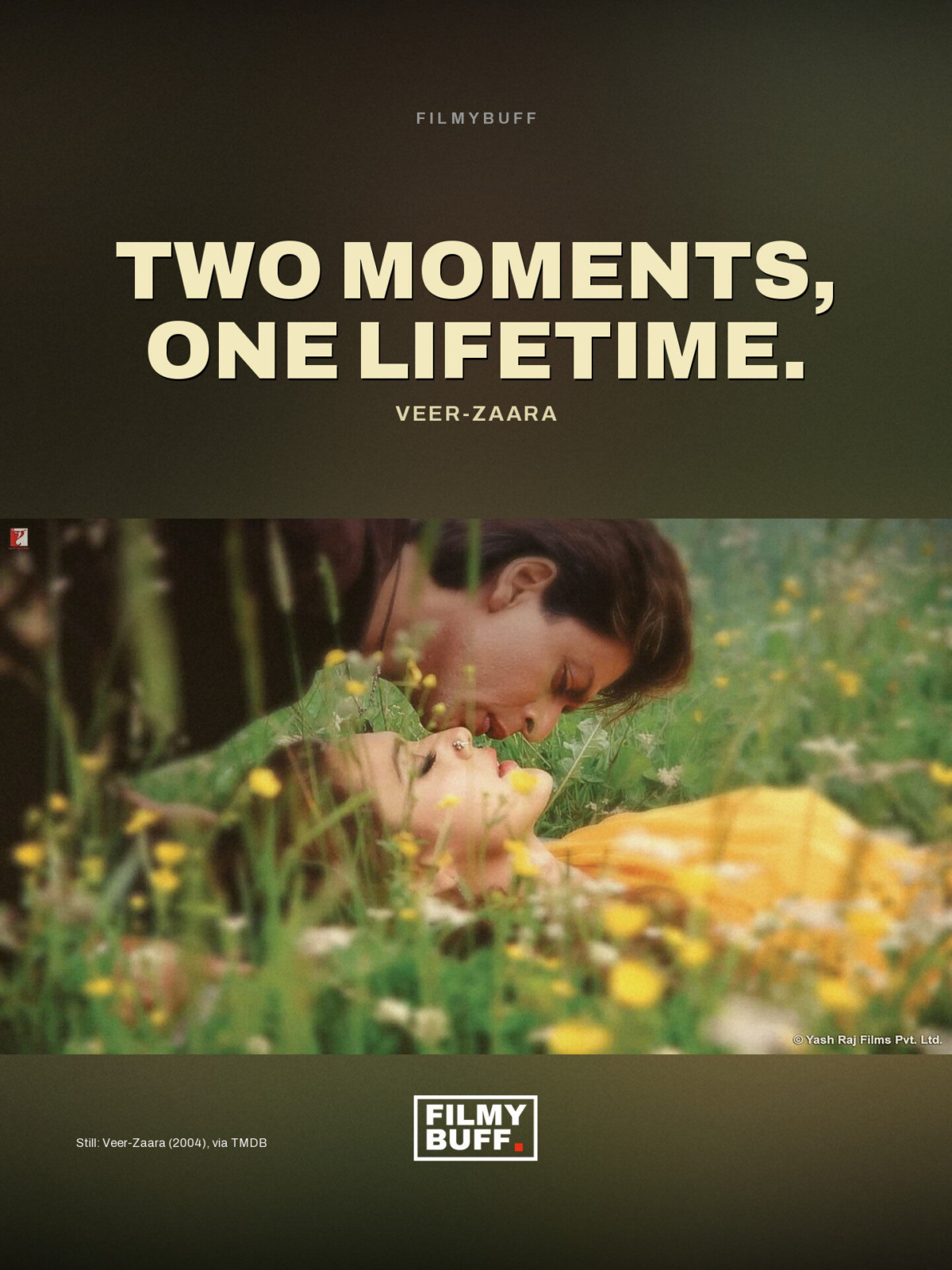
The scene starts in the key of memory: golden Punjab fields, Zaara moving through them, Lata Mangeshkar’s voice doing most of the storytelling. The turn comes when the same refrain is answered by Sonu Nigam, and the film cuts to Veer in grey prison light. It is no longer a duet between two people in one place; it is two people singing the same two moments from different countries.
The line
I keep coming back to “Do pal ruka, khwabon ka kaarwan.” It lands because it makes a small promise: the caravan of dreams stopped for only two moments. But the song keeps holding those two moments up to the light, stretching them until they become the entire film. Lata Mangeshkar’s phrasing on “ruka” is everything—she pauses just enough to make you feel the stop, then the melody moves on without her permission.
The performance
Preity Zinta does the harder job: Zaara is not crying, not pleading, just remembering. She smiles with her mouth before her eyes, and she looks just past the camera, as if Veer is not available to look at. Shah Rukh Khan, in the prison present, underplays the heartbreak. His eyes flicker toward the light and then fall, and the muscle in his jaw tightens once. A lesser scene would ask both actors to sob; this one asks them to hold it, which is far more difficult.
The craft
The music is doing structural work: Madan Mohan’s tune keeps lifting on “khwabon ka kaarwan,” so the phrase feels like a small window opening before it closes. The cut is just as precise—the edit lingers on Zaara’s face a beat longer than it should before snapping to Veer’s cell, so the absence becomes the transition. And the sound design keeps the prison alive under the melody: a distant footstep, the echo of a gate, enough reality to stop the memory from becoming syrup. The camera also refuses to over-close; Yash Chopra pushes in on Shah Rukh’s face but stops short of a tight close-up, as if the song is allowed to feel what the camera will not say.
Why it travels
Fans share Do Pal because it is the film’s thesis in one song: two moments that become a lifetime. You do not need the plot to feel the promise and the loss. Lata and Sonu trade the refrain like letters across a border, and the visuals give you the romance and the reality in the same breath. It is the rare Bollywood song that works as a scene, a memory and a rewatchable ache all at once.
Watch the original: YRF on YouTube. Shown for review and comment; the rights stay with the makers.