The setup
By the time “Galat Baat Hai” arrives in Main Tera Hero, I am already laughing at Seenu’s romantic chaos. The song doesn’t have to move plot forward; it has to sell a persona: the overconfident hero who knows he is being shameless, wants the whole room to laugh with him, and never asks permission. That’s the whole stake of the sequence.
The turn
The opening bars keep things light and almost romantic, with Varun swaying like he is about to fall into a standard love song. Then the rhythm tightens, the title phrase drops, and the choreography flips from smooth to deliberately off. That’s the gear change I keep rewinding: the film stops pretending this is a love song and turns it into a comic dare with a beat.
The line
“Galat baat hai.”
I still say this line with him, and it works because it keeps scolding while the body keeps confessing. The writing gives the singer a complaint that sounds outraged, but the timing pulls the air out of the outrage, and the delivery turns it into a knowing punchline. It’s a full joke in three words, repeated just enough to become yours.
The performance
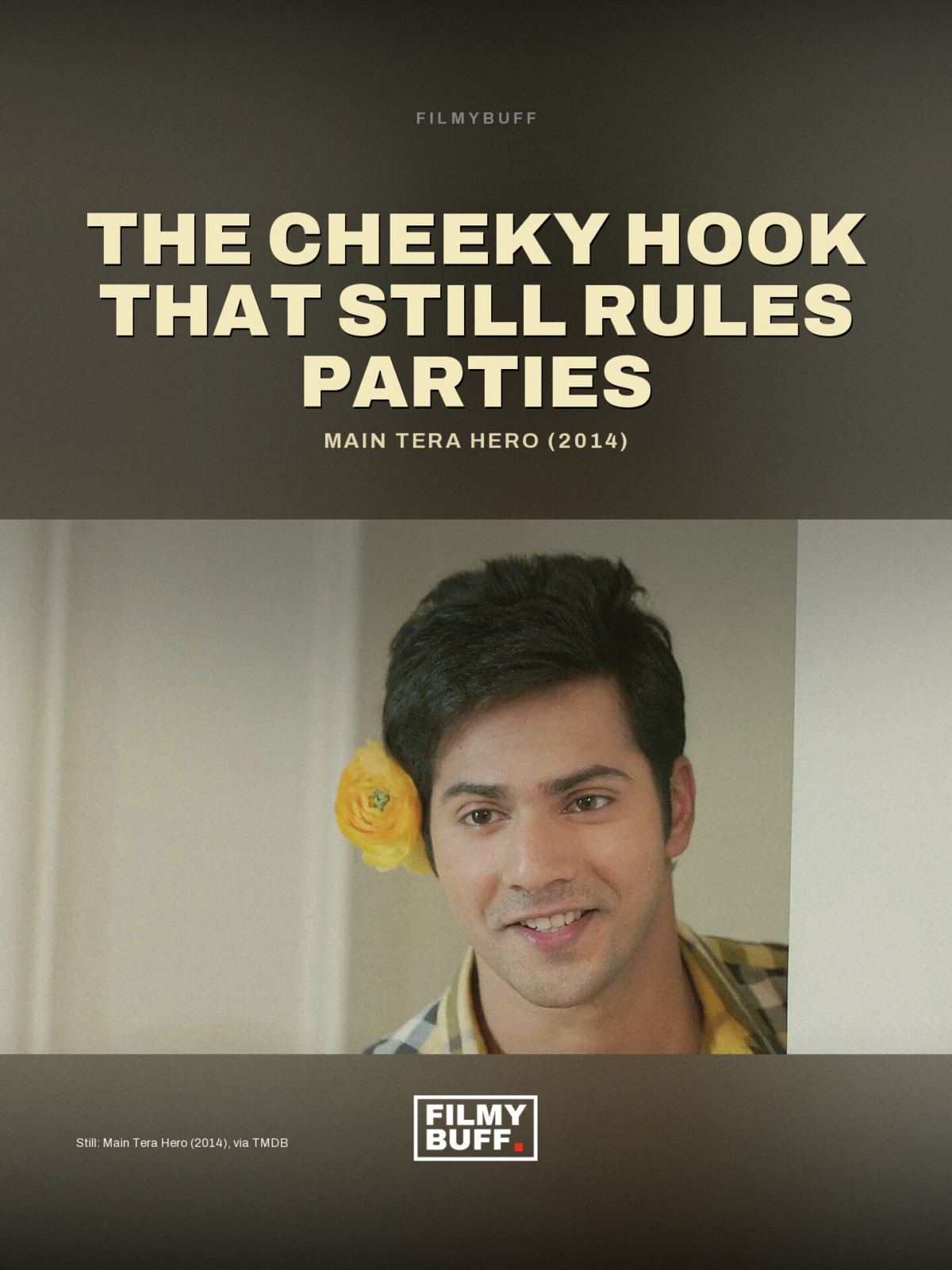
What gets me is how fully Varun Dhawan commits to the joke with his whole body. Watch his shoulders: he throws them a half-beat too early, so the move reads as eagerness, not skill. His face stays smug, almost flat, while his hips do far too much. Ileana and Nargis don’t just pose behind him; they react with mock exasperation, which tells us the hero is being enjoyed, not believed.
The craft
Sajid-Wajid’s arrangement does a lot of the heavy lifting, and I find myself coming back to how the dhol hit under the title phrase lands like a buzzer. The cut lands on that same hit nearly every time, so the edit becomes part of the rhythm. The camera makes one specific choice: a slow push-in on Varun’s deadpan while the beat does the comedy behind him. In the mix, the crowd response rises right after the hook, so the video tells me how to feel before I catch up.
Why it travels
For me, this is the scene people share because it gives you three things at once: a hook you can say, a move you can copy, and a face you can screenshot. It doesn’t ask for context, emotion, or patience, only participation. Years later, it still works as a party clip, a meme fragment, or a throwback that needs no setup beyond pressing play.
Watch the original: T-Series on YouTube. Shown for review and comment; the rights stay with the makers.