1. The setup: where the scene sits in the film and what is at stake
I come into this scene already on edge because the forest in Kantara: Chapter 1 is not scenery, it is a spiritual and legal zone. Rishab Shetty’s character is alone at night, carrying a ritual burden, and the dark is treated as a boundary he should not have crossed. What is at stake is not just his life; it is whether the mortal and the daiva can share the same breath.
2. The turn: the beat where the scene changes gear, and how the film gets there
The sequence spends its opening minute making me listen: leaves, insects, a guttering flame, a camera moving through undergrowth like the forest is closing in. The turn is not a lunge; it is the moment the Brahmarakshasa stops being a sound and becomes a shape, and he stops retreating. The film earns that change by refusing to cut away—his stillness becomes a decision, not a pause.
3. The line: the line or the moment people quote, and why it lands
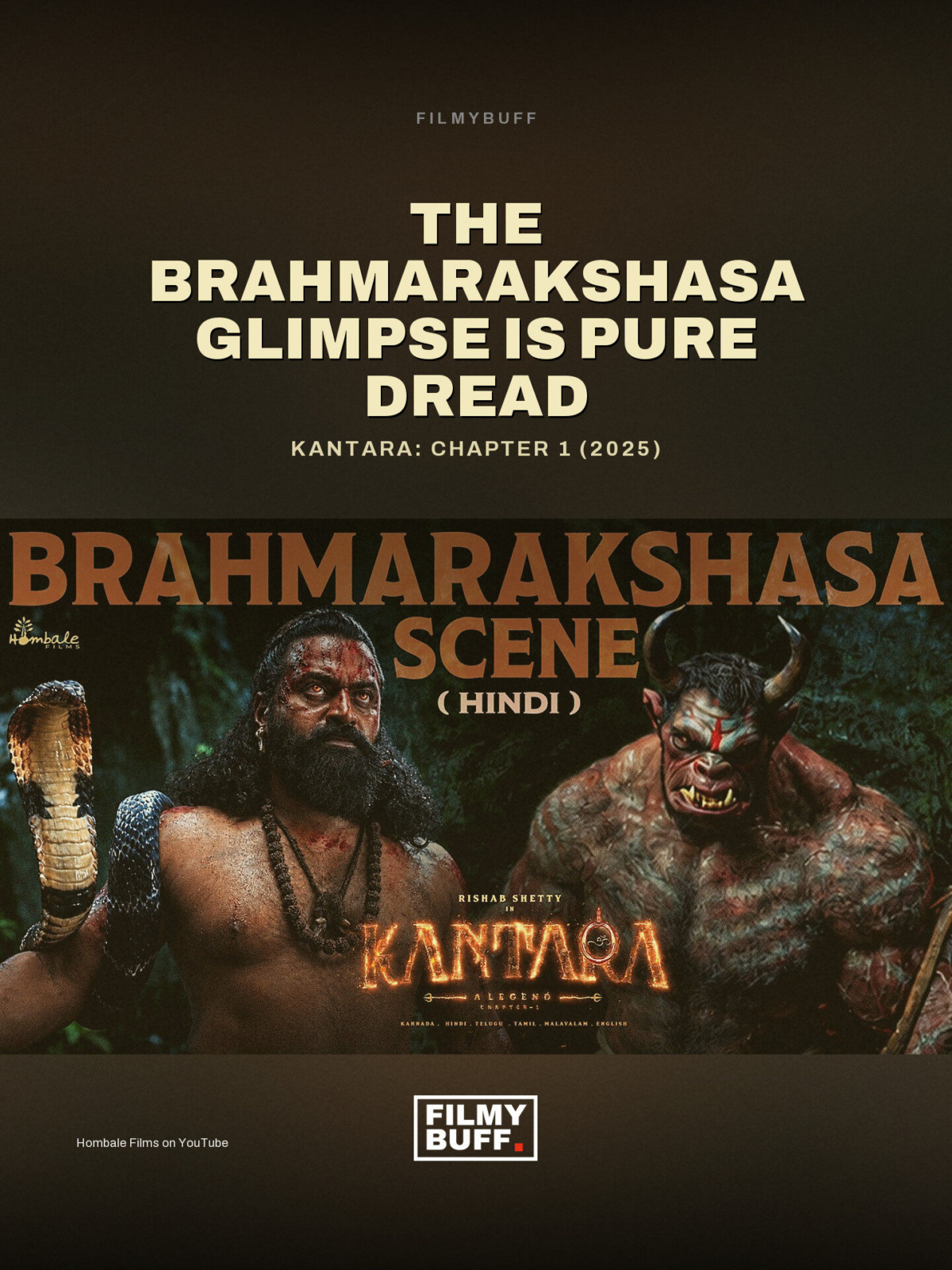
For me the quotable moment is not a dialogue line; it is the first full glimpse of the Brahmarakshasa after the chanting peaks. The writing lets him see it a beat before we do, and the timing withholds the reveal until the air goes thin. It lands because the face feels ancient and regionally specific, not a generic jump-scare ghoul.
4. The performance: what the actor or actors do, precisely, that a lesser scene would not
Rishab Shetty does something precise: his panic is in his breath and his eyes, not his limbs. He does not flail; he drops his shoulder slightly, as though the ritual is straightening his spine while his body still wants to run. A lesser scene would make him a victim; he makes the turn to fury feel like a possession with consent.
5. The craft: the staging, the cut, the music, the sound, the camera, whichever carries it, with one specific choice named for each you mention
The staging traps him in a black frame with the torch as the only warm thing, so the forest feels enormous. The camera’s specific choice is a low, handheld push that keeps the Brahmarakshasa out of clean focus until the reveal. The cut withholds the creature until after the chant peaks, and the sound design places a wet, guttural exhale just off-screen left, which makes my ear flinch before my eye. Ajaneesh Loknath’s specific choice is to drop the score to one sustained vocal note right as he turns, so the moment reads as ritual dread instead of a scare.
6. Why it travels
This is the scene people share because it is the prequel’s promise in miniature: a star, a forest, a folk-horror monster, and the original’s texture without leaning on it. The Brahmarakshasa glimpse is screenshot-worthy, but the clip keeps circulating because the fear feels unhurried, cultural and earned.
Watch the original: Hombale Films on YouTube. Shown for review and comment; the rights stay with the makers.