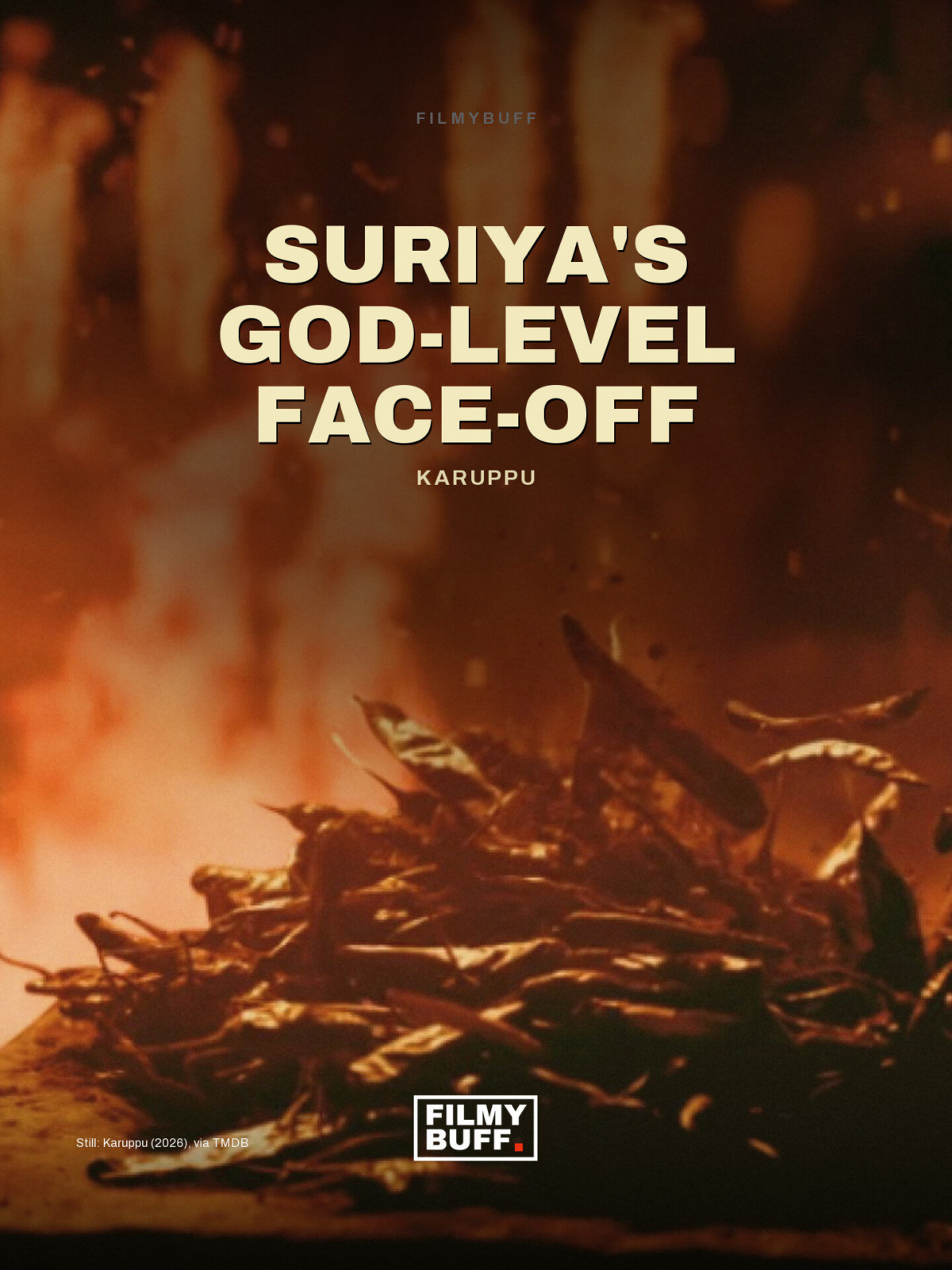
There are mass moments, and then there is the kind of frame that makes a theatre go silent before it erupts. I have watched the clip three times this morning, and each time the same beat lands like a punch I know is coming.
The setup
By this stage, Karuppu has already stacked its cards against Suriya’s character. The room is full of people waiting for him to flinch, and the film has made it clear that composure is the only weapon left. Nothing after this is the same, but the scene asks one question before anything explodes: can he hold the ground without raising his voice?
The turn
The scene appears to be a negotiation or warning, then suddenly it is a verdict. The change comes not through editing but through a shift in posture; Suriya stops performing restraint and lets the silence belong to him. The film gets there by holding the shot a beat longer than expected, so the turn feels less like a reaction and more like an arrival.
The line
The moment people are quoting is not a thunderous punchline. It is the almost casual low delivery of the line that flips the threat back, released with a half-smile. It lands because the writing sets up a question everyone in the room wants answered, and the delivery delays the answer just long enough for the audience to lean in. The timing turns a simple statement into a dare.
The performance
What Suriya does here is unusually precise. He does not chew the frame; he stills it. His eyes do the tracking work while his body stays rooted, which makes the one small step forward feel enormous. A lesser scene would have him shout or point. He underlines the moment by lowering his volume, and that is exactly why the opponent’s silence feels soaked in defeat.
The craft
The staging puts Suriya at a slight diagonal to the group, which isolates him without cutting him off from their space. The cut waits with him; the editor refuses to break the shot when he pauses, so we sit inside his calm. The music changes from a low bed of percussion to a single sustained note, and the sound mix pulls back the room tone right before he speaks. On camera, a slow push-in moves from mid-shot to tight close-up, making sure no one else shares the frame when the line lands.
Why it travels
People share this scene because it gives them the thing they came for: a hero who wins by not exploding. Days or decades later, it will be clipped not because the action is loud but because the control is total. That is the kind of moment Tamil cinema viewers recognise instantly, and it is already doing numbers for a reason.
Watch the original: Prime Video India on YouTube. Shown for review and comment; the rights stay with the makers.