1. The setup: where the scene sits in the film and what is at stake, in two or three sentences, no spoilers beyond it.
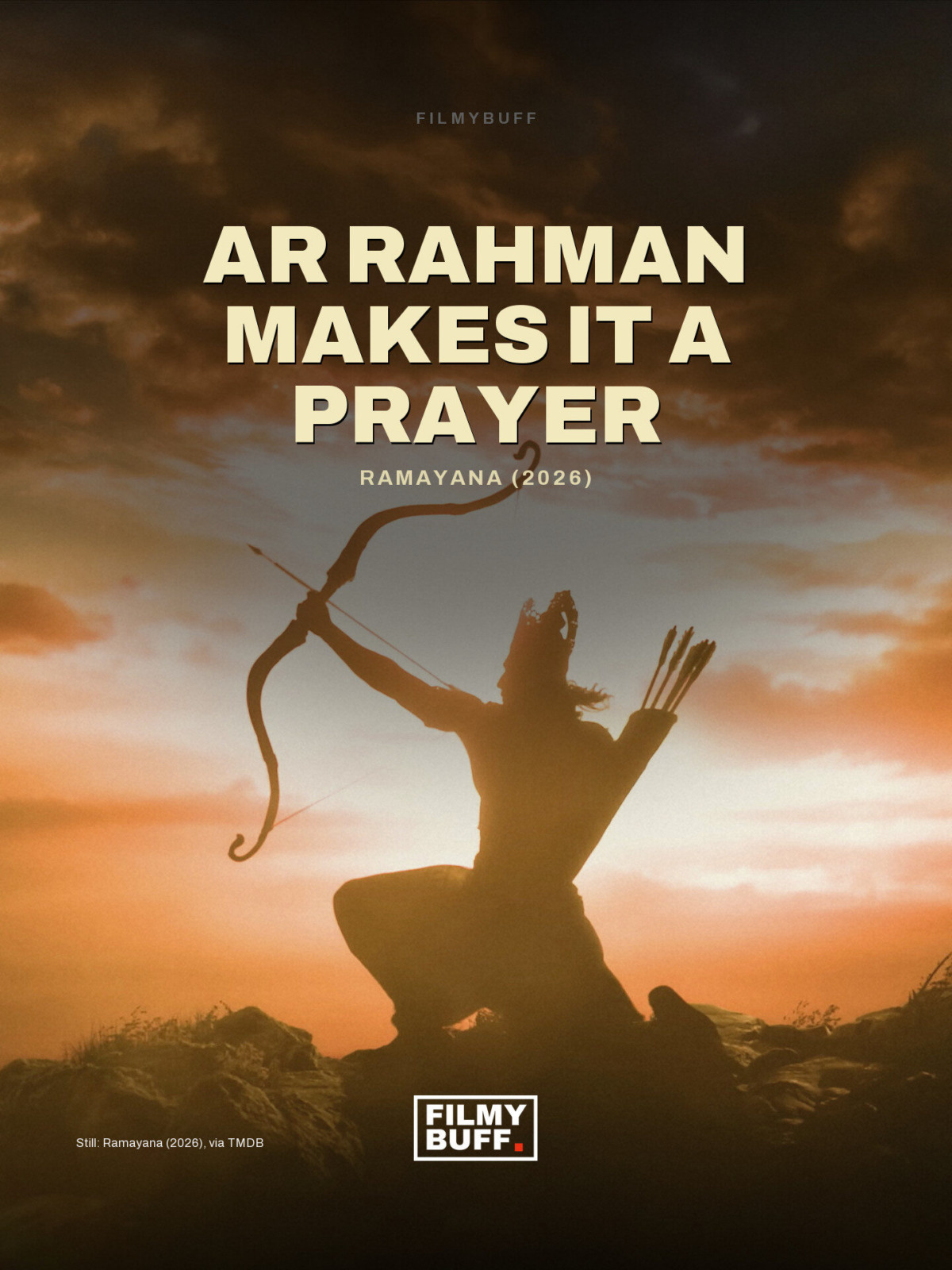
This is not an item number; it is the film’s devotional centre of gravity. Early in Ramayana, before the war fully begins, the song establishes what Ram means to Ayodhya and what Ravana’s shadow means to the world. The stakes are not one battle, but whether devotion can hold against vanity.
2. The turn: the beat where the scene changes gear, and how the film gets there.
The first forty seconds keep me in a hush: strings, a low chant, close-ups of Ranbir Kapoor with his eyes down. Then the dhol lands, the tempo doubles, and A. R. Rahman does what he does best—he turns a prayer into a procession. The camera stops observing and starts moving with the crowd, and that is the moment I stop analysing and just feel.
3. The line: the line or the moment people quote, and why it lands (the writing, the timing, the delivery).
“Jai Jai Ram” is the line, and it is smart because it is not written as a hook; it is written as a chant. Shreya Ghoshal and Arijit Singh do not sell it as a melody. They lean into the repetition, letting the name become a pulse. When the chorus lifts, the phrase has already become bigger than any one character—it belongs to the film.
4. The performance: what the actor or actors do, precisely, that a lesser scene would not.
Ranbir Kapoor underplays the divinity, which is the right choice. He does not widen his eyes or strain for awe; he carries stillness, as if the calm is the performance. Yash, in contrast, does almost nothing at first—then he turns, and the frame turns with him. A lesser film would cut to his evil laugh. This one lets his silence do the threatening.
5. The craft: the staging, the cut, the music, the sound, the camera, whichever carries it, with one specific choice named for each you mention.
Rahman’s arrangement is the spine: a mridangam-like thump keeps the beat, but he withholds the full choir until the second half. The cut that stays with me is the hard match from Ranbir’s bow being raised to Yash’s eyes opening, two frames joined by the same low angle. The sound mix then drops the instruments for a half-second so the chant hangs in the air. The camera does the rest: a slow crane pull-back makes the crowd feel not like extras but like a tide.
6. Why it travels: why this scene is the one people share, decades or days later.
Because it gives you the scale without forgetting the silence. Fans share it for A. R. Rahman’s score and for the spectacle of Ranbir and Yash sharing a frame, but it travels because it feels like a promise: that this Ramayana will treat its myth as both cinema and faith. At two minutes nine, it is built for repeat play—and the repeat play is the point.
Watch the original: T-Series and 2 more on YouTube. Shown for review and comment; the rights stay with the makers.