The setup
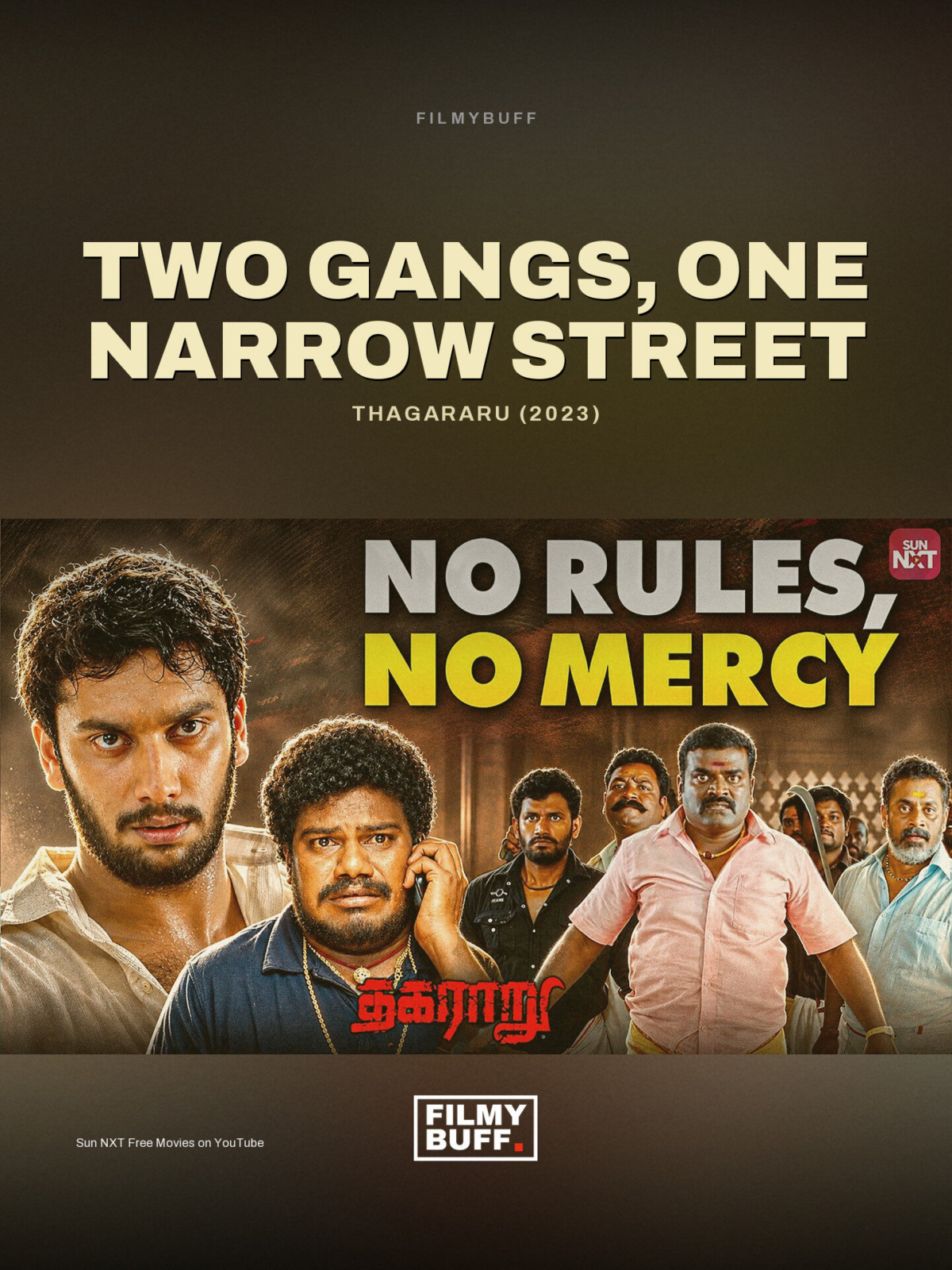
By the time this lane becomes a battlefield, Thagararu has already told me that Arulnithi’s character cannot simply walk away. The rival gangs own the streets, the loyalties, and the silence around them, and he is the one body with no flag on his shoulder. I read the scene as less about choosing a side and more about surviving the next ninety seconds.
The turn
For me, the scene changes gear with a held glance, not a shout. The camera lets the crowd thin out while the two frontmen close the distance, and the sound of commerce—cycles, a vendor, a gate scraping—drops to a low, tight murmur. Then someone shifts weight onto his back foot, and the street turns from a standoff into a stampede of blunt objects and close fists. That is the beat I keep coming back to: violence does not start with a punch, it starts with everyone deciding there is no one left to stop it.
The line
Nobody is quoting a monologue from this scene. The moment I hear repeated is a very small one: Arulnithi, caught in the middle, does not scream or announce himself. He flinches, looks for an exit that is already gone, and then moves. If there is a line people quote, it is the sharp intake of breath just before the first weapon clears a hand—because the film lets silence do the talking before the street does.
The performance
Arulnithi plays it like a man who knows exactly how bad this is and refuses to perform heroism. I watch his shoulders stay high, his eyes flick to the sides instead of fixing on an enemy, and his hands come up only as shields, never as threats. That physical honesty sells the fear and the fatigue, so when he does take a swing or shove through the crowd, it feels earned rather than choreographed.
The craft
The staging keeps the lane narrow enough that every swing feels close to the lens, with bodies crossing in and out of frame. The cut favours short, unglamorous shots over wide spectacle: a blurry shoulder in the foreground, a metal rod glancing off a wall, a foot slipping in the dust. The music stays out of the way, leaving room for grunts, scuffles, and the clang of everyday objects used as weapons. One specific choice that carries it for me is the sound mix lowering the city ambience to a near-hum after the turn, so the violence lands in an almost airtight pocket of noise. Another is the camera staying at shoulder height instead of rising above the fight, which makes the scene feel like something I am inside rather than watching.
Why it travels
I think fans share this because it delivers exactly what the title promises—raw, close-quarters street action with no room for a star to pose. It is the kind of scene that looks like it hurt to film, and that texture makes it rewatchable. Decades from now, if people remember Thagararu, this is the stretch they will pull up to show what Tamil cinema can do when it strips a set piece down to sweat, fear, and concrete.
Watch the original: Sun NXT Free Movies on YouTube. Shown for review and comment; the rights stay with the makers.