
By the numbers
- Films: 21 since 2012; 16 in the last ten years (cameos and guest appearances not counted)
- Recent films with figures: 8 of 14 since 2016
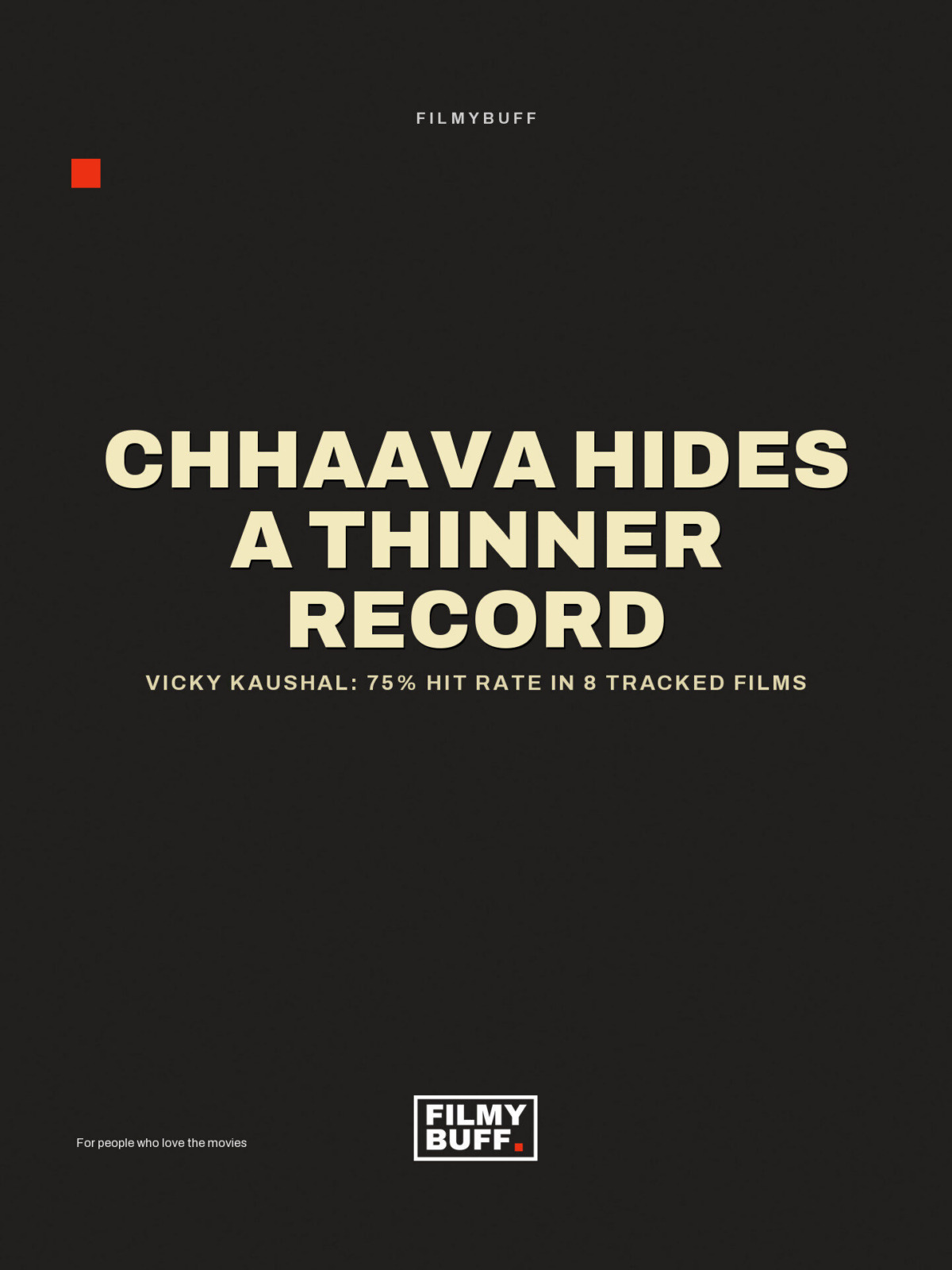
- Hits: 6 (4 blockbusters), average: 1, flops: 1 – a hit rate of 75%
- Average return: 3.65x budget; best: Chhaava 8.86x; weakest: The Great Indian Family 0.14x
- Biggest hit: Chhaava (2025), ₹797 cr
- Trend: last five films 3.14x on average, the five before 4.51x (down)
- Born: 1988-05-16
| Year | Film | Budget | Box office | Return | Verdict |
|---|---|---|---|---|---|
| 2025 | Chhaava | ₹90 cr | ₹797 cr | 8.86x | Blockbuster |
| 2024 | Bad Newz | ₹80 cr | ₹116 cr | 1.45x | Average |
| 2023 | Sam Bahadur | ₹55 cr | ₹128 cr | 2.33x | Hit |
| 2023 | The Great Indian Family | ₹40 cr | ₹5.7 cr | 0.14x | Flop |
| 2023 | Zara Hatke Zara Bachke | ₹40 cr | ₹116 cr | 2.90x | Blockbuster |
| 2022 | Govinda Naam Mera | – | – | – | No figures |
| 2021 | Sardar Udham | – | – | – | No figures |
| 2018 | Manmarziyaan | – | ₹40 cr | – | No figures |
| 2018 | Sanju | ₹96 cr | ₹587 cr | 6.11x | Blockbuster |
| 2018 | Lust Stories | – | – | – | No figures |
| 2018 | Raazi | ₹35 cr | ₹190 cr | 5.43x | Blockbuster |
| 2018 | Love per Square Foot | – | – | – | No figures |
| 2016 | Raman Raghav 2.0 | ₹3.5 cr | ₹7.0 cr | 2.00x | Hit |
| 2016 | Zubaan | – | – | – | No figures |
What the numbers say
In the table above, only 8 of Vicky Kaushal’s 21 listed films carry reportable budget and gross figures. The listed career runs from a 2012 debut to a 2025 release, and 16 of the 21 films fall in the last decade. As of 27 September 2026, the reported data captures only a slice of that run. Across the eight reportable titles, the line is 6 hits, 4 blockbusters, 1 flop and a 75 percent hit rate. The average multiple is 3.65, drawn from a total gross of ₹1,987.0 crore. That is a strong top line, but it is also a concentrated one: the record leans heavily on one 2025 title.
The hits and the misses
The biggest hit and best multiple is Chhaava (2025). It moved from a ₹90.0 crore budget to a ₹797.34 crore gross, an 8.86 multiple. Around it sit other blockbusters with real range: Sanju at 6.11 and Raazi at 5.43, while Zara Hatke Zara Bachke reached 2.90. The weakest return is The Great Indian Family (2023), which grossed ₹5.65 crore against a ₹40.0 crore budget, a 0.14 multiple and the only flop among the tracked titles. Manmarziyaan has a reported gross of ₹40.39 crore but no reported budget or multiple, so it cannot sit in the same hit-or-flop ladder.
The trend
The recent five tracked films average a 3.14 multiple, against 4.51 for the five before. That is a decline, but it is also a story of one number. Chhaava accounts for the 8.86 at the top of the recent set, while the other recent entries are more modest: Bad Newz at 1.45, Sam Bahadur at 2.33, Zara Hatke Zara Bachke at 2.90 and The Great Indian Family at 0.14. Outside the tracked set, several streaming-era titles, including Sardar Udham and Govinda Naam Mera, carry no figures. Where Wikipedia carries none, the multiple arithmetic simply stops.
What it means for his next film and for the industry
For Kaushal, the scoreboard sets a high but narrow bar. The next release will be judged against Chhaava‘s 8.86 multiple as much as against the overall 75 percent hit rate. That is not entirely fair, because no one film should define a career, but it is how the box-office conversation works after a ₹797.34 crore gross. The filmography suggests a repeatable path: a supporting role in a blockbuster can build commercial credibility, which is then tested through mid-budget solo vehicles. For the industry, the numbers caution against reading one year’s breakout as a full trend. Kaushal’s reported record is convincing, but it rests on eight data points and one massive outlier. That is enough to call him a bankable leading man in the right vehicle; it is not yet enough to call every vehicle a safe one. The industry should treat him as a strong but vehicle-dependent asset rather than an all-format guarantee.
Figures: Vicky Kaushal on Wikipedia and each film’s page, read on 27 September 2026.