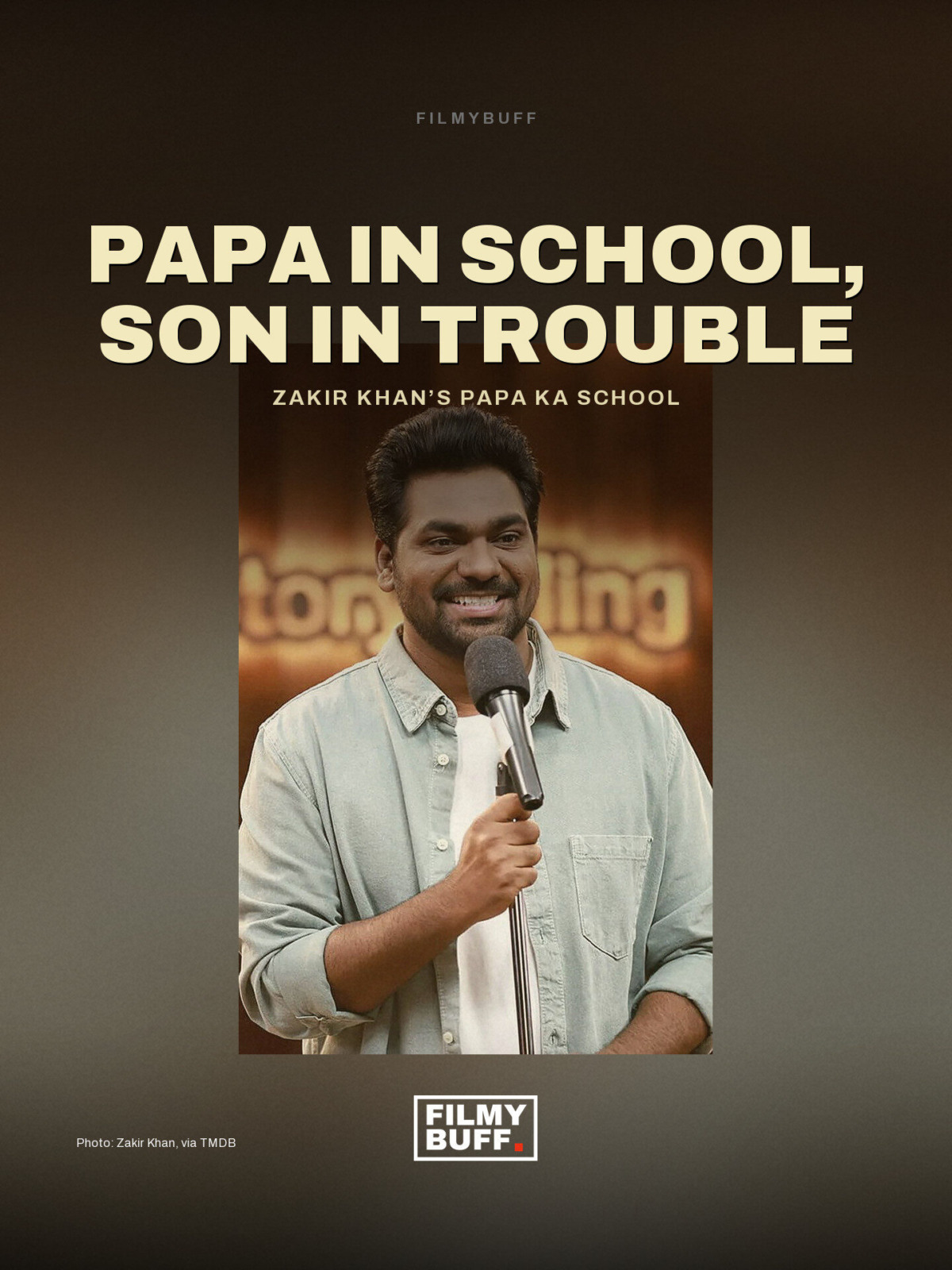
I keep coming back to this 1:57 for the same reason the rest of the internet does: it is not a joke about school, it is a joke about being a son. The clip from Zakir Khan: Papa Yaar opens in the middle of a larger set, but it carries its own little three-act structure.
The setup
By the time Zakir gets here, the audience already knows his father is the emotional engine of the hour. The stakes are simple and huge: a school memory becomes a test of who explains what, and the son is already losing. He is not just telling us a story; he is about to perform his father in front of a hall full of people who recognize the man.
The turn
The gear change happens when Zakir stops narrating and becomes Papa. His shoulders settle, his chin tilts down, and the pace drops from conversational to deliberate. The film gets there without editing tricks; it simply holds the wide long enough for you to see the transformation happen in his body. That is the cue for the crowd, and the first wave of laughter lands before the punchline is even finished.
The line
The moment people quote is not a one-liner; it is the way he stretches a single, ordinary word into a whole parental verdict. The writing is precise because the word is small, the timing is cruel because he lingers just past comfort, and the delivery is pure eldest-child memory. You don’t remember the sentence, you remember the sound of being caught.
The performance
What Zakir does here that a lesser comic would not is hold both roles at once. He gives us the schoolboy son and the father in the same face, often in the same breath. His hands stay close, his eyes flick to the audience like he is checking whether they have met this man too. It is not mimicry; it is character work disguised as family gossip.
The craft
The staging is deliberately plain: one microphone, a stool, and a dark backdrop, so nothing competes with the voice. The camera earns its laugh with a slow push from a mid-shot into a tight close-up as the father impression locks in. The cut waits a beat after the punchline, then goes to a front-row reaction shot, so the audience becomes a release valve. There is no music, and the sound design uses the room’s dip before the turn to make his slowing delivery feel like a held breath.
Why it travels
This clip shares because it feels like a home video from everyone’s childhood. It is specific enough to be Zakir’s father, generous enough to be every Indian dad. Days or decades later, people send it the way you’d forward a family voice note: not to explain a joke, but to say, “You know this man.”
Watch the original: Netflix India on YouTube. Shown for review and comment; the rights stay with the makers.