1. The setup: where the scene sits in the film and what is at stake, in two or three sentences, no spoilers beyond it.
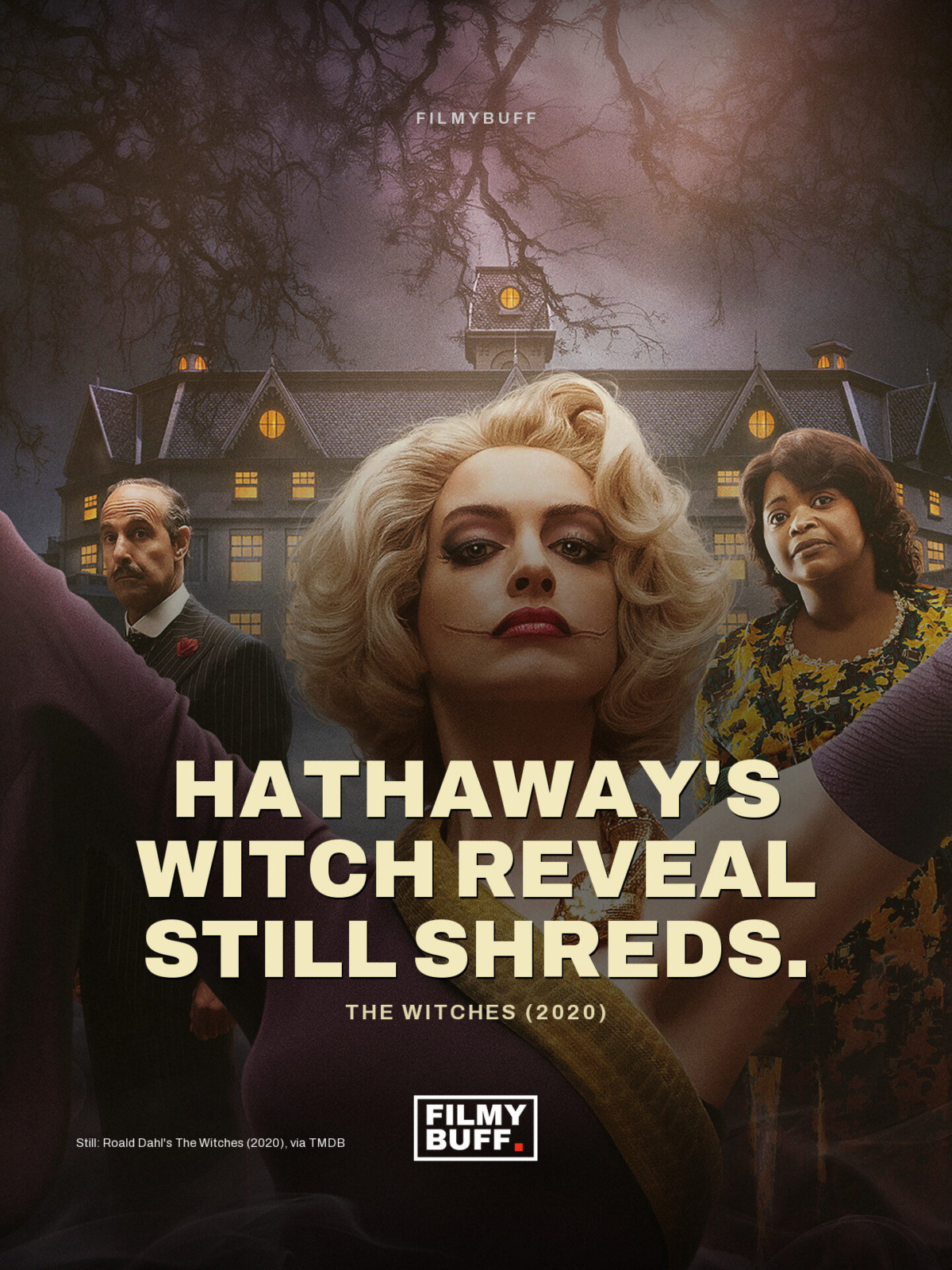
We are inside the hotel ballroom where the witches have gathered under the cover of a charity meeting, and the boy is hidden where he should not be. The Grand High Witch has been all caramel charm and barely contained menace, working the room like a predator in silk. If he is caught, the fantasy stops being a story and starts being the last few seconds of his life.
2. The turn: the beat where the scene changes gear, and how the film gets there.
The turn arrives not with a jump scare but with a kind of surrender. The Grand High Witch stops performing for the room and starts performing for herself. Hathaway’s voice drops from polished to guttural, the polite laughter dies, and Robert Zemeckis pushes the camera closer as if her face is pulling it in. By the time the change begins, we understand the children in the room have walked into something irreversible.
3. The line: the line or the moment people quote, and why it lands (the writing, the timing, the delivery).
The line here is not a zinger; it is the sound of her illusion being peeled off. You quote it with your body—the wet crack of the wig coming loose, the unhinging sigh, the low, satisfied hum as she straightens into her true height. It lands because the writing has spent the scene making her theatrical, and the delivery lets the monster out through the last seams of the costume.
4. The performance: what the actor or actors do, precisely, that a lesser scene would not.
Hathaway plays the reveal as relief, not rage. Before it, she keeps her elbows tight and her smile pulled wide, like the human shape is holding her together. When she lets go, her shoulders broaden, her neck cranes, and her hands open into claws testing the air. A lesser actor would lunge at the boy; Hathaway luxuriates, because the Grand High Witch is finally back in the skin she prefers.
5. The craft: the staging, the cut, the music, the sound, the camera, whichever carries it, with one specific choice named for each you mention.
The mix drops the room tone a beat before the reveal, so the first things we hear are physical: fabric tearing, joints cracking, breath from the back of her throat. The camera starts at safe ballroom distance, then cuts to a low angle looking up, which makes the chandeliers feel like witnesses. Alan Silvestri’s score holds back, letting one dissonant string creep beneath the prosthetics. And the edit holds on the children’s faces a half-second too long before returning to her, so we are told exactly whose fear this scene is built for.
6. Why it travels: why this scene is the one people share, decades or days later.
It travels because it breaks the contract of a family film just enough to shock, without becoming unwatchable. Fans share it to say, “This was for kids?” and to marvel at Hathaway disappearing into a monster with glee. It is built for replays: every repeat reveals something new in her hands, her teeth, or the room’s frozen faces.
Watch the original: Warner Bros. Entertainment on YouTube. Shown for review and comment; the rights stay with the makers.